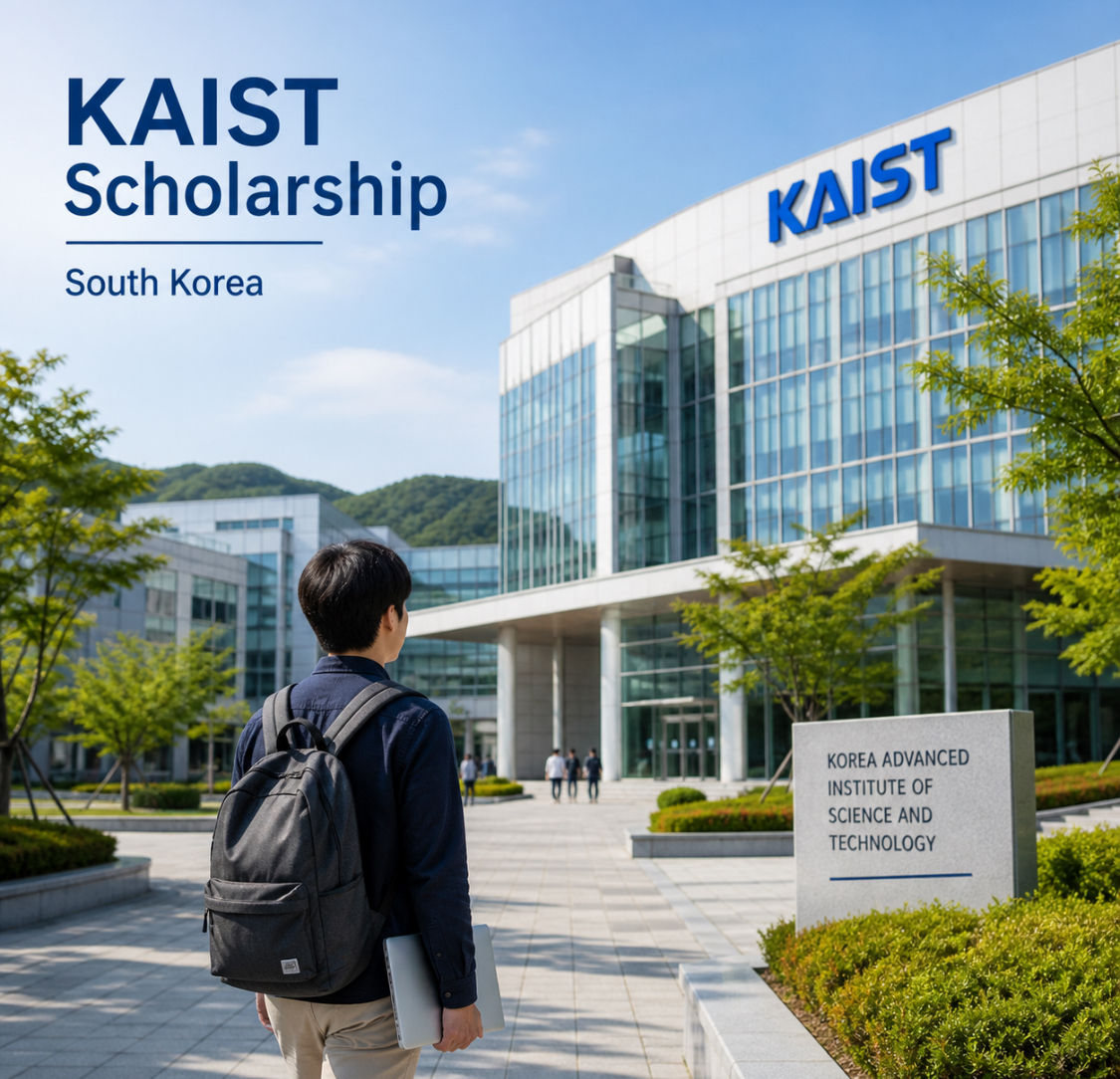
Last updated: May 2026. Details in this article reflect current public information from KAIST admissions and scholarship pages. Scholarship amounts, deadlines, document rules, and department-level funding can change by intake, so applicants should confirm the latest details directly through the official KAIST international undergraduate admissions and KAIST international graduate admissions pages before applying.
KAIST is not the kind of university students usually discover by accident. For serious STEM applicants looking at South Korea, it appears early in the search because of its reputation in engineering, computing, natural sciences, robotics, materials science, biotechnology, and research-led graduate training. The Korea Advanced Institute of Science and Technology was built around science and technology from the start, and that identity still shapes how international applicants are assessed.
The KAIST International Student Scholarship matters because it is tied closely to admission. For many international applicants, especially those applying from countries where foreign tuition and living costs can block access to elite science education, KAIST’s scholarship structure changes the calculation. A student is not simply asking whether they can enter a strong Korean university. They are asking whether KAIST can cover tuition and provide enough support to make a STEM degree in South Korea financially possible.
At undergraduate level, KAIST’s international scholarship is commonly understood as covering full tuition for up to eight semesters, with a monthly living allowance and health insurance support for selected students. At graduate level, the funding picture is broader and more department-dependent. Master’s, integrated Master’s-PhD, and PhD students may receive tuition support, living stipends, and research-based funding through KAIST, departments, laboratories, professors, or scholarship tracks. The official KAIST scholarship pages explain the university’s scholarship structure and renewal rules, including academic performance conditions for continued support.
The biggest mistake applicants make is treating “fully funded” as a simple label. KAIST funding is generous, but it is not a blank cheque. Undergraduate students still need to understand living costs in Daejeon. Graduate applicants need to understand how research labs, professors, and departments influence funding. A PhD applicant in artificial intelligence or electrical engineering faces a different admissions conversation from an undergraduate applicant applying after high school. The scholarship name may look similar online, but the application logic is not identical.
For 2026–2027 applicants, the strongest approach is straightforward: treat KAIST as a research university first and a scholarship opportunity second. The scholarship follows strength. Strong grades matter, but they are rarely enough on their own. KAIST wants evidence that an applicant can survive rigorous STEM coursework, communicate in English, contribute to laboratories or technical projects, and grow inside a research-heavy environment.
Important note: KAIST admissions and scholarship details vary between undergraduate and graduate applicants. There is no safe shortcut here. Applicants should always check the official admissions page for their level, intake, department, and scholarship category before preparing documents or relying on figures found on scholarship blogs.
About KAIST and Why STEM Applicants Choose It
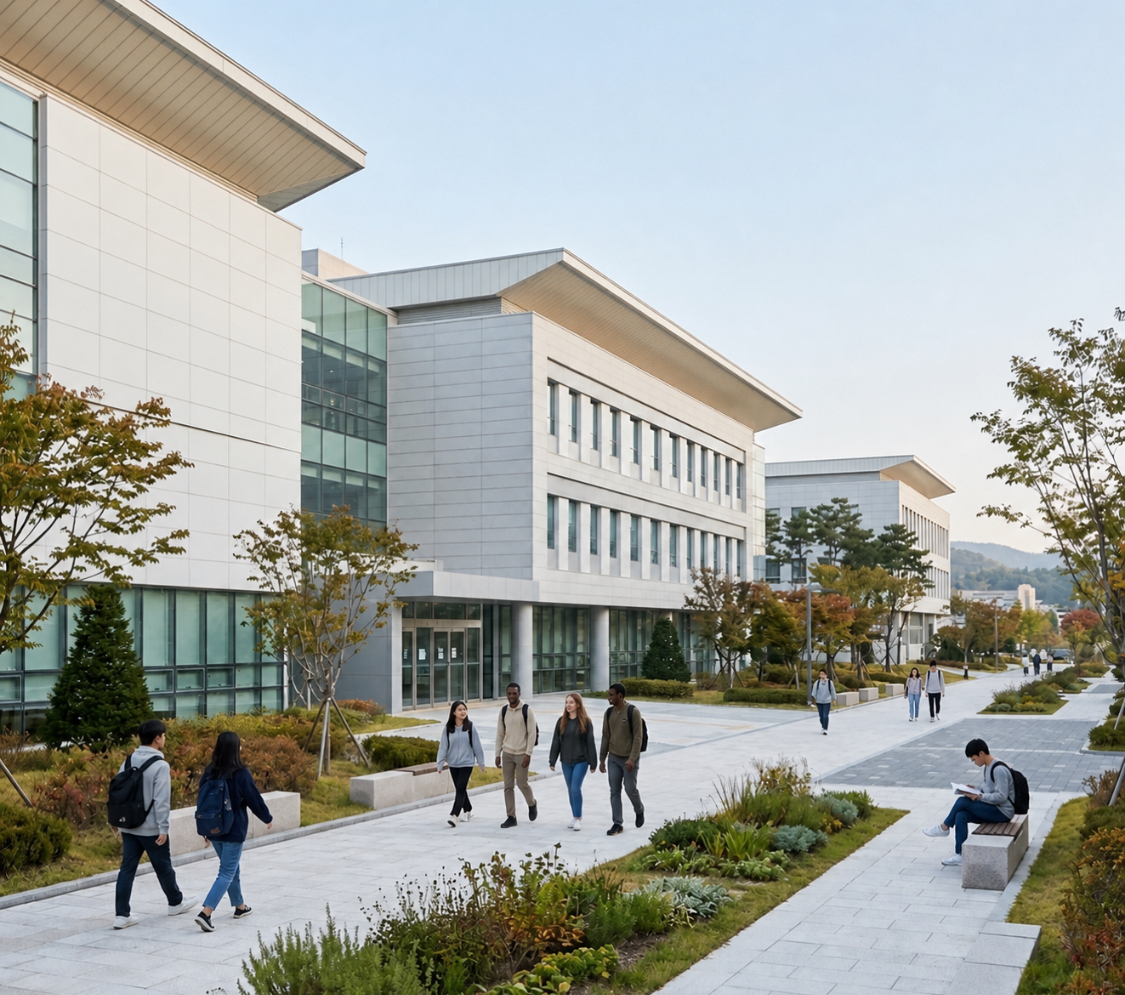
KAIST sits in Daejeon, a research and technology city rather than a tourist-heavy capital. That matters more than many applicants realise. Seoul has stronger name recognition internationally, but Daejeon gives KAIST a different rhythm: laboratories, institutes, science parks, quieter student life, and lower living pressure than central Seoul. For a student entering a demanding STEM programme, that environment can be an advantage.
The university’s academic identity is unusually concentrated. KAIST is not trying to be everything at once. Its strongest reputation comes from science, engineering, computing, and applied research. The official KAIST academics page notes that English has been used as a main language of teaching since 2008, which makes the university more accessible to international students than many Korean institutions where Korean-language fluency becomes a stronger academic barrier.
That does not mean Korean language is useless. It still matters for daily life, internships, part-time communication, friendships outside the international circle, and long-term career options in Korea. But for admissions and classroom access, KAIST’s English-medium structure gives international STEM applicants a clearer path.
Independent rankings also explain why KAIST appears in serious STEM searches. QS lists KAIST among the world’s highly ranked research universities, while Times Higher Education places KAIST strongly in computer science and engineering subject rankings. Rankings should never be the only reason to apply, but they show something useful: KAIST is not only regionally respected. It competes globally in the exact fields most international scholarship applicants care about.
There is another reason KAIST attracts ambitious applicants: it is not built around passive study. Research groups, laboratory work, graduate supervision, startup culture, and industry-linked projects sit close to the student experience. A graduate applicant who wants to work on robotics, AI chips, wireless systems, battery materials, bioengineering, quantum devices, or computational science will be judged partly on whether their past work and future plans make sense inside that ecosystem.
Undergraduate applicants should also understand this early. KAIST may accept students after high school, but the environment is not soft. A student who only wants the scholarship without the workload will struggle. STEM courses move fast. Peer competition is serious. Scholarship renewal depends on academic performance, and KAIST’s scholarship rules state that continued support is linked to credit completion and GPA requirements after admission.
KAIST vs SNU vs POSTECH: What Makes KAIST Different
Applicants comparing South Korea’s strongest universities usually arrive at three names: KAIST, Seoul National University, and POSTECH. All three are respected. They are not interchangeable.
Seoul National University carries broad national prestige. It is stronger as a full-spectrum university with deep recognition across disciplines, government, medicine, humanities, social sciences, law, engineering, and public life. For students who want the widest institutional name recognition in Korea, SNU has obvious appeal.
POSTECH is smaller and deeply science-oriented. It has a strong research culture, particularly in engineering, materials, physics, chemistry, and technology-related fields. Its scale creates a concentrated academic environment, but its international footprint is often perceived as narrower than KAIST’s among global applicants.
KAIST sits between those two in a distinctive way. It is more specialised than SNU, broader and more internationally visible than many smaller science universities, and deeply tied to Korea’s research and technology ambitions. For international STEM applicants, that mix is the attraction. The question is not only “Which Korean university is famous?” The better question is: “Where does my research profile make the most sense?”
| University | Main Strength | Best Fit |
|---|---|---|
| KAIST | STEM research, engineering, computing, technology innovation | Applicants targeting research-heavy science and engineering programmes |
| SNU | Broad national prestige across many disciplines | Applicants seeking Korea’s flagship comprehensive university |
| POSTECH | Focused science and engineering research environment | Applicants who prefer a smaller, highly concentrated STEM campus |
The location difference should not be ignored. KAIST is in Daejeon, not Seoul. Some students see that as a weakness because Seoul has more international visibility, more entertainment, and more corporate headquarters. I would treat it more carefully. Daejeon is cheaper, calmer, and strongly connected to Korea’s research infrastructure. For students living on scholarship support, lower daily pressure matters.
Students comparing KAIST with European or North American STEM funding routes may also want to keep a wider scholarship list. KAIST is strongest for applicants committed to science and technology in Asia, while programmes such as the DAAD scholarship for Master’s and PhD study in Germany offer a different route into European research systems. The better strategy is not to copy one application across countries, but to understand why each system funds students differently.
KAIST Scholarship Benefits: Tuition, Stipend, Housing, and Health Insurance
The phrase “fully funded” appears everywhere when KAIST is mentioned, but the details behind it are where most applicants get confused. KAIST does fund international students generously, but the structure is layered, and it behaves differently depending on whether you are applying as an undergraduate or a graduate student.
At undergraduate level, the KAIST International Student Scholarship is relatively clear. Selected students typically receive full tuition coverage for up to eight semesters. A monthly allowance is also provided, often around 350,000 KRW, along with national health insurance support. That structure allows students to focus on academics without worrying about tuition fees, but it does not eliminate all living expenses.
Graduate funding is less uniform. KAIST states that admitted graduate students may receive financial support through teaching assistantships, research assistantships, departmental funding, or professor-led laboratory funding. In practical terms, this means two students in the same university may receive different stipend levels depending on their department, research group, and supervisor.
| Benefit | Undergraduate | Graduate (Master’s/PhD) |
|---|---|---|
| Tuition | Full tuition (up to 8 semesters) | Typically covered (varies by program) |
| Monthly Stipend | ~350,000 KRW | ~300,000 – 1,000,000+ KRW (depends on lab/funding) |
| Health Insurance | National Health Insurance supported | National Health Insurance supported |
| Housing | On-campus housing available (subsidized) | On-campus housing available (cost varies) |
| Additional Support | Limited extras | Research funding, lab support, assistantships |
One detail worth stating directly: housing is not always free. KAIST provides access to dormitories, and costs are lower than private accommodation, but students still pay part of their living expenses. The monthly stipend is designed to help cover these costs, not eliminate them completely.
Students who arrive expecting a fully covered lifestyle sometimes struggle in their first semester. Daejeon is cheaper than Seoul, but food, personal expenses, transportation, and study materials still add up. The stipend works best for students who manage their spending carefully rather than relying on it passively.
Reality check: KAIST funding removes tuition pressure, but it does not remove financial responsibility. Students who budget properly tend to stay comfortable. Those who treat the stipend as unlimited spending money usually feel the gap within the first few months.
There is also the question of renewal. KAIST does not continue scholarships automatically without conditions. Undergraduate students are expected to maintain a minimum GPA after their first year, often around 2.7 out of 4.3 depending on the official policy. Graduate students are assessed through academic progress, research output, and supervisor evaluation. A scholarship can be reduced or withdrawn if performance drops.
Applicants exploring multiple funding options often compare KAIST with other global scholarships. Some prefer broader funding pools like fully funded scholarships for international students, while others focus on research-driven systems like KAIST. The difference is not just funding amount. It is how the university expects students to perform once funding is granted.
Cost of Living in Daejeon and Whether the KAIST Stipend Is Enough
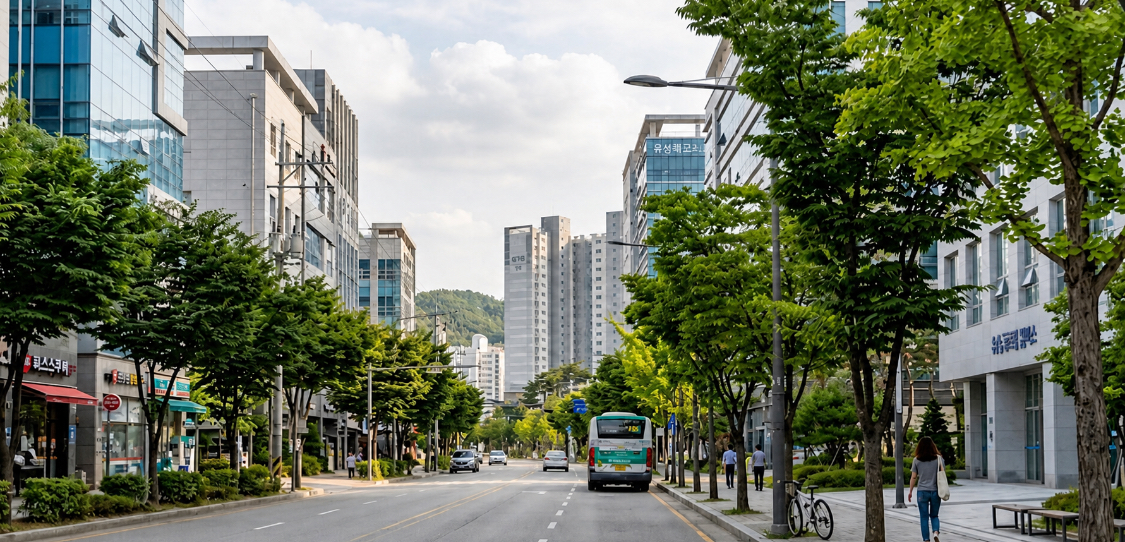
One of the assumptions many applicants make is that a fully funded scholarship removes financial pressure entirely. That is not always the case. KAIST covers tuition, and the stipend provides a base level of support, but day-to-day financial stability depends on how well a student understands the cost structure in Daejeon.
Daejeon is significantly more affordable than Seoul. Rent, food, and transport costs are lower, and the campus environment reduces the need for frequent travel. This difference is one of the reasons many KAIST students are able to manage within the standard stipend range.
For undergraduate students receiving approximately 350,000 KRW per month, budgeting requires discipline. On-campus housing, when available, simplifies this. Students who cook regularly and limit discretionary spending tend to remain within budget without difficulty.
Graduate students generally receive higher stipends, particularly when supported through research assistantships or departmental funding. In these cases, the financial situation becomes more stable, especially for students involved in funded projects.
Food costs remain manageable when relying on campus cafeterias or local restaurants, which are priced for students rather than tourists. Transportation costs are minimal for most KAIST students due to the campus-centered routine.
The pressure usually appears in smaller areas—personal spending, travel, or lifestyle choices. Students who expect a fully covered lifestyle without budgeting often experience shortfalls. Those who treat the stipend as a structured monthly resource rarely face serious issues.
The key is not the amount itself. It is how predictable the spending pattern becomes once a student settles into a routine.
Eligibility Requirements: GPA, English Scores, Nationality, and STEM Fit
KAIST does not publish a single “cut-off profile” that guarantees admission. What it does provide is a structure: nationality rules, academic expectations, English requirements, and application components. Everything else sits inside competitive selection.
Nationality is the first filter. KAIST international admissions are generally open to applicants who do not hold Korean citizenship. In many cases, applicants with dual citizenship involving Korea may face restrictions or be directed to domestic admission tracks. This is one of those details applicants should confirm early on the official KAIST admissions page rather than assuming eligibility.
Academic background is where most applicants underestimate the standard. For undergraduate admission, strong high school performance is expected, particularly in mathematics, physics, chemistry, or relevant STEM subjects. For graduate applicants, KAIST expects a clear academic progression: a bachelor’s degree (or master’s for PhD applicants) in a relevant field, with evidence of technical depth.
Grades matter, but rank and context matter more. KAIST reviews applicants globally. A GPA on its own means little without context. Being in the top percentile of a class, performing strongly in competitive exams, or showing consistent excellence in STEM subjects carries more weight than a single numerical average.
English proficiency sits in a slightly misunderstood position in KAIST admissions. For undergraduate applicants, official KAIST admissions materials do not frame TOEFL or IELTS as a strict requirement. Instead, the university states that it is “strongly recommended” that applicants submit scores such as TOEFL iBT 83 or IELTS 6.5.
That wording matters. It means an undergraduate application is not automatically rejected without a test score. At the same time, competitive applicants almost always submit one. In real admission cycles, the recommendation functions very close to a requirement, especially for international students coming from non-English-medium systems.
At the graduate level, the expectation becomes more formal. Most KAIST graduate programs treat English proficiency as a required component of the application, with defined minimum thresholds and far less flexibility than the undergraduate track.
The safest position for applicants is simple: submit a strong English score regardless of level. Relying only on the “recommended” wording without clear proof of English ability weakens an application in a highly competitive pool.
STEM alignment is where KAIST differs from many universities. Applicants are not being evaluated only as students. They are being evaluated as future contributors to science and engineering work. A computer science applicant without programming experience, a mechanical engineering applicant without project work, or a biotechnology applicant without laboratory exposure is at a disadvantage.
Graduate applicants face an even sharper version of this. KAIST departments expect applicants to show research direction. That can appear through final-year projects, internships, publications, coding repositories, lab work, or detailed statements of purpose. A generic “interest in science” does not survive review.
Observation: The strongest KAIST applications are rarely balanced profiles. They are usually slightly uneven in a useful way — very strong in a specific technical area, backed by real work, even if other parts of the application are simply solid.
KAIST also reviews recommendation letters, statements of purpose, and academic consistency. Applicants sometimes underestimate how closely these pieces are read. A strong recommendation that speaks about problem-solving ability or research contribution carries more weight than a generic endorsement.
Students preparing multiple applications often reuse documents across universities. That approach rarely works well for KAIST. The expectations are too specific. Applicants who want structured help on writing strong statements may find it useful to study how competitive scholarship essays are built, for example in this breakdown of the Fulbright personal statement and study objective. The format differs, but the principle is similar: clarity, evidence, and direction matter more than storytelling.
How the Application Actually Moves: From Portal to Decision
KAIST runs two separate tracks for international applicants: undergraduate and graduate. The forms look similar on the surface, but the logic behind them is not the same. Undergraduate admission is closer to a structured academic review. Graduate admission behaves more like a research match process, even when it isn’t formally described that way.
For undergraduates, everything starts with the international application portal. The current entry point sits under KAIST’s admissions pages, and the system walks applicants through personal data, academic history, test scores, and document uploads. The sequence is fixed. Miss a field or submit an incomplete file and the application can be rejected before it reaches academic review. KAIST does not spend time fixing avoidable errors.
Graduate applicants use a different portal and a different rhythm. You still complete the same core sections—academic history, English scores, recommendations—but the weight shifts toward research intent. Departments review applications, and in many cases professors are involved in evaluation, especially at PhD level. That is why some applicants reach out to potential supervisors before applying. It is not mandatory, but in certain labs it changes how your application is read.
Deadlines move every year. There is no stable calendar you can rely on across cycles. Recent graduate intakes have closed in early September for spring admission and later in the year for fall, but those dates are only a reference point. The only safe approach is to check the official KAIST page for the exact intake you are targeting and work backward from that date.
Timing matters more than most people think: recommendation letters are submitted separately and often have their own deadline window. Applicants who upload everything else but delay recommendation requests tend to miss the cycle entirely.
The application fee is typically around USD 80. Some applicants qualify for fee waivers, but this depends on the specific admission track and current KAIST policies. It is not automatically granted.
After submission, the review process begins. Undergraduate applicants go through document evaluation, and in some cases additional screening steps. Graduate applicants may be invited for interviews depending on department and programme. Interviews are not guaranteed, but when they happen, they are usually technical or research-oriented rather than general conversation.
There is one detail applicants often overlook: KAIST does not run a separate scholarship application for most international tracks. Funding is considered as part of the admission process. That means you do not “apply for the scholarship later.” If your admission is strong and you meet the funding criteria, the scholarship is included in the offer.
This is where strategy matters. Some applicants submit strong academic records but treat the application casually because they assume the scholarship is automatic. Others approach it as a funding competition. The second group tends to perform better because they understand what is being evaluated.
A Practical Timeline That Actually Works
Applicants who succeed rarely start late. A realistic preparation window looks like this:
- 6–12 months before deadline: Identify programme, confirm eligibility, start English test if needed
- 4–6 months before: Prepare statement of purpose, gather transcripts, contact referees
- 2–3 months before: Finalise documents, request recommendation letters early
- 1 month before: Submit application, double-check uploads, confirm recommendation submissions
- Post-submission: Monitor email for updates or interview invitations
This timeline looks basic, but most rejected applications fail inside it. Late preparation leads to rushed statements. Late recommendation requests lead to weak letters. Missing documents lead to disqualification before academic review even begins.
Students applying to multiple countries often reuse timelines across applications. That approach breaks down quickly. KAIST’s structure, especially for graduate research alignment, requires more intentional preparation than a generic multi-university submission.
For applicants also exploring Chinese or other Asian scholarship systems, understanding how acceptance processes differ can help avoid mistakes. For example, the structure behind a CSC scholarship acceptance letter process shows how some systems rely more heavily on pre-approval from supervisors. KAIST does not follow that exact model, but the idea of academic fit still applies.
Documents That Actually Decide Your Application
Applicants often think of documents as a checklist. KAIST treats them as evidence. Each file answers a specific question about you, and weak documents tend to fail quietly rather than dramatically.
| Document | What KAIST Looks For |
|---|---|
| Academic Transcripts | Consistency, strength in STEM subjects, grade trends |
| Diploma/Certificates | Verification of completed or expected degree |
| Statement of Purpose | Clarity of direction, technical interest, alignment with KAIST |
| Recommendation Letters | Evidence of ability, not generic praise |
| English Test Scores | Proof of academic communication ability |
| CV / Resume (Grad) | Projects, research, technical experience |
| Research Proposal (PhD) | Direction, feasibility, alignment with lab work |
| Passport Copy | Identity verification |
The statement of purpose deserves more attention than most applicants give it. KAIST reads these carefully, especially for graduate programmes. A strong statement does not try to impress with language. It explains what you have done, what you want to do next, and why KAIST is the place where that work makes sense.
Recommendation letters follow the same logic. A detailed letter from a lecturer who supervised your project is more useful than a generic letter from a senior professor who barely knows your work. KAIST looks for evidence, not titles.
Formatting mistakes also cost applicants quietly. Uploading the wrong file, submitting unreadable scans, or mixing unofficial and official documents can lead to rejection before academic review. It sounds minor, but it happens every cycle.
Applicants who treat documents as formalities usually lose to those who treat them as proof. The difference is visible even before the selection stage.
What Strong KAIST Applications Actually Look Like
There is a pattern to applications that get through. It is not about perfection. It is about clarity and evidence. When KAIST reviewers read an application, they are not trying to be impressed. They are trying to decide whether you can survive their academic system and contribute something meaningful inside it.
The strongest undergraduate applicants usually show two things at once: consistent academic performance and some form of independent effort. That second part matters more than many expect. It could be a personal coding project, participation in science competitions, a robotics build, mathematics olympiad experience, or even self-driven learning that goes beyond the school curriculum. Without that signal, the application starts to look generic.
Graduate applicants are judged more directly on technical depth. A master’s applicant who has worked on a final-year project with measurable results has an advantage. A PhD applicant who can explain a research direction clearly—without relying on vague interest statements—moves ahead quickly. KAIST departments are not looking for students who “like science.” They are looking for students who already behave like early-stage researchers.
Observation: Applications that feel unfinished rarely fail because of grades. They fail because the applicant has not shown what they actually do with their knowledge.
Where Applications Usually Break
Most rejections do not come from a single mistake. They come from small weaknesses that add up.
- Generic statements of purpose: Writing that could be sent to any university without change
- Weak recommendation letters: Vague praise without concrete examples
- Minimal technical exposure: No projects, no research, no applied work
- Late preparation: Rushed documents that feel incomplete
- Ignoring programme fit: Applying without understanding KAIST departments or labs
Applicants sometimes try to compensate for weak areas by over-explaining. That rarely works. Reviewers notice quickly when a statement tries to fill space instead of showing substance.
There is also a tendency to over-polish language. KAIST does not reward writing style alone. A simple, direct explanation of what you built, tested, or studied is more effective than complex wording that hides weak content.
What Gives an Application Weight
Applications that stand out usually include at least one of the following:
- A project with measurable output (code, prototype, experiment, publication)
- Clear academic ranking or strong performance in competitive exams
- Research experience, even at a small scale
- A focused statement that connects past work to future study
- Recommendation letters that describe real work, not personality
None of these guarantees admission. But without at least one, the application becomes harder to defend during review.
Students often ask whether awards or international competitions are required. They are not required, but they help. What matters more is whether your work shows effort beyond basic coursework.
For applicants preparing multiple scholarship applications, the safest approach is to avoid copying documents across systems. KAIST applications reward specificity. A statement written for a broad scholarship pool rarely fits without serious adjustment.
What KAIST Admissions Actually Look For (Beyond Grades and Test Scores)

There is a pattern that shows up repeatedly across strong KAIST applications, and it has very little to do with perfect grades alone. High scores get attention, but they do not secure admission on their own. What tends to separate accepted candidates is how clearly their academic direction is already formed before applying.
KAIST is not trying to build a classroom of general high achievers. It is selecting students who already behave like early-stage researchers or engineers. That difference becomes visible in how applicants describe their work, not just what they have studied.
For undergraduate applicants, this often appears as sustained interest in a specific area of STEM. Not scattered participation across many activities, but a visible pattern. A student who has spent time building small systems, participating in competitions, or exploring a focused technical interest tends to stand out more than someone with broad but shallow achievements.
At the graduate level, the expectation becomes sharper. Admissions teams pay close attention to how well an applicant’s research interests align with existing KAIST labs. A statement of purpose that reads like a general ambition rarely holds weight. What works is specificity—naming problems, methods, or areas of study that clearly connect to ongoing work within the university.
Recommendation letters carry more influence than many applicants expect. Generic praise is easy to recognize and rarely changes an outcome. Letters that describe how a student approaches problems, handles uncertainty, or contributes to technical work tend to carry far more weight.
There is also a practical layer that is rarely discussed openly. KAIST invests heavily in students through funding and research infrastructure. Admissions decisions reflect that reality. The question is not just whether a student can succeed academically, but whether they are likely to contribute meaningfully to research output during their time there.
Strong applications answer that question clearly, even without stating it directly.
After Admission: What Changes Once You Arrive
Admission is not the end of the process. For many students, it is where the real adjustment begins. KAIST expects students to operate independently very quickly, especially in technical programmes.
International students first deal with visa processing, arrival logistics, and housing arrangements. KAIST provides guidance on these steps, but responsibility still sits with the student. Missing a document or delaying a visa step can affect arrival timelines.
Housing is usually arranged through on-campus dormitories. The environment is structured, but it is not identical to what some international students expect. Rooms are functional, shared spaces are common, and daily routines are shaped by academic schedules rather than leisure.
Academic pressure becomes visible early. Courses move quickly. Assignments are not designed to be easy. Group work, lab sessions, and independent study all demand time. Students who arrive expecting a relaxed pace often struggle during the first semester.
Important: scholarship continuation depends on performance. Falling below the required GPA can affect funding. KAIST does not separate financial support from academic expectations.
Graduate students experience a different structure. Coursework exists, but research becomes central much earlier. Students work closely with supervisors, and expectations are shaped by lab culture. Some labs are highly structured. Others expect independence from the start. Understanding that difference before choosing a programme helps avoid surprises.
Life outside academics is quieter than in Seoul, but not empty. Daejeon has student communities, research networks, and social spaces, but it does not operate like a major global city. Students who prefer focus tend to adapt well. Those expecting constant activity sometimes find the adjustment slower.
Long-term opportunities also depend on how students use their time. Internships, research collaborations, and connections with industry partners often begin during study, not after graduation. KAIST’s position within Korea’s technology ecosystem makes those pathways accessible, but they are not automatic.
Final Thoughts
KAIST sits in a very specific position. It is not the easiest route into international study, and it is not designed for students who want flexibility without pressure. It rewards a certain type of applicant—someone who already takes technical work seriously and is willing to build on that inside a demanding system.
The scholarship makes access possible. It does not remove expectations. Students who treat it as funding alone often miss that point. Students who treat it as an entry into a research environment tend to use it well.
For applicants preparing now, the most useful step is not rushing into the portal. It is stepping back and asking a simple question: what have I actually done in my field, and does it make sense in a place like KAIST? That answer shapes everything that follows.
Note: Scholarship structures, stipend amounts, and deadlines may change across admission cycles. Always confirm details through official KAIST admissions pages before submitting an application.
Frequently Asked Questions About KAIST International Student Scholarship
Do I need a separate application for the KAIST scholarship?
No. KAIST does not run a separate scholarship application for most international students. Once you apply for admission and indicate financial support in the application form, you are automatically considered.
How competitive is KAIST for international students?
Highly competitive. Strong grades alone are not enough. KAIST evaluates applicants based on academic direction, technical experience, and how well their profile aligns with the program.
Is the KAIST stipend enough to live comfortably in South Korea?
In Daejeon, it is generally manageable. The city is more affordable than Seoul, and many students stay within budget when housing is subsidized and spending is controlled.
Can I apply to KAIST without English test scores?
KAIST states that English test scores are strongly recommended for undergraduate applicants, not strictly required. However, most successful applicants still submit TOEFL or IELTS results. At the graduate level, English scores are generally treated as a required part of the application.
Does KAIST require Korean language proficiency?
No. Most programs are taught in English, and Korean is not required for admission. However, basic Korean helps with daily life and integration outside campus.
When should I start preparing my KAIST application?
At least 6 to 12 months before the deadline. This allows enough time for English tests, recommendation letters, and building a focused application aligned with KAIST programs.

Founder of The Global Scholar Guide, focused on international scholarships, student visas, and practical study abroad guidance.