A quick note before you continue reading:
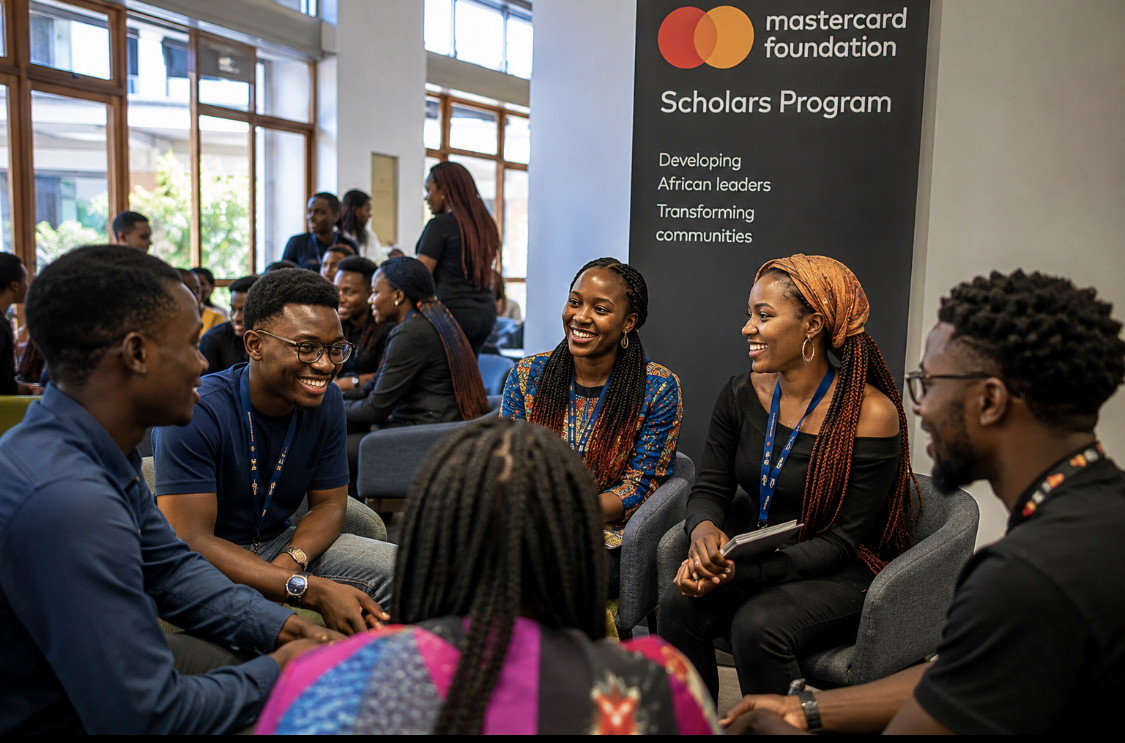
The Mastercard Foundation Scholars Program is not a normal scholarship list where students simply check a deadline and submit documents. It is a long-term education and leadership initiative built around African talent, financial need, academic promise, and commitment to community impact.
Read this carefully before applying. The program works through partner universities, and each partner has its own deadlines, eligible degrees, age rules, admission process, and selection method. Missing that detail is one of the easiest ways strong applicants lose time.
The Mastercard Foundation Scholars Program 2026 remains one of the most significant fully funded scholarship pathways for talented African students who have strong academic ability but limited financial resources.
For many African students, the barrier to higher education is not ambition. It is cost. Tuition fees, accommodation, meals, books, visa expenses, travel, health insurance, laptops, and living costs can turn an admission offer into something unreachable. That is the gap the Mastercard Foundation Scholars Program was created to confront.
The program is often described as a scholarship, but that word alone is too small for what it actually does. The Mastercard Foundation positions the Scholars Program as a long-term initiative to develop young people, especially from Africa, into leaders who can contribute to social and economic transformation. Its official program page states that students apply through partner universities and organizations, not through one central Mastercard Foundation application portal.
That structural detail changes how applicants should approach the scholarship entirely.
A student who wants to apply for the Mastercard Foundation Scholars Program must first understand the partner institution model. You do not simply send one application to the Foundation and wait. You identify a participating university, check the eligible degree level, meet that university’s admission requirements, and follow the Mastercard Foundation Scholars Program instructions published by that institution.
The scale of the program is also unusual. The Foundation has described the Scholars Program as one of its flagship education initiatives, with a long-term ambition to reach 100,000 young people by 2030. Earlier public updates from the Foundation noted that the program had already supported tens of thousands of young people, with a stronger emphasis on young women, forcibly displaced youth, and people with disabilities.
That is why the program attracts so much attention across Africa. It does not only pay fees. At many partner institutions, it combines full financial support with academic advising, leadership development, mentorship, career preparation, psychosocial support, and an alumni network. For a student coming from a low-income background, a rural community, a refugee context, or a family where university costs are unrealistic, that wider support can change the entire academic journey.
Still, the Mastercard Foundation Scholars Program is highly competitive. A strong academic record alone is rarely enough. The program looks for students whose education is tied to leadership, service, problem-solving, and contribution to Africa. A student who presents the scholarship only as a personal escape route usually sounds weaker than one who can explain how education, community, and long-term impact connect.
This is where many applicants misunderstand the program.
The Mastercard Foundation Scholars Program is not built around prestige for prestige’s sake. It is not just about entering a famous university abroad. It is about developing young Africans who are likely to return value to their communities, sectors, countries, or the continent more broadly.
Important note: Information about the Mastercard Foundation Scholars Program can change by partner university, academic year, degree level, and country. Treat this as a research-based reference current for the 2026 application cycle, then verify deadlines and requirements directly on the official Mastercard Foundation page and the partner university website before applying.
What Is the Mastercard Foundation Scholars Program?
The Mastercard Foundation Scholars Program is a fully funded education and leadership initiative for academically talented young people who face significant financial and social barriers to higher education.
The program focuses strongly on African students. Its partner institutions include universities in Africa, North America, Europe, and other regions, but the mission remains closely tied to Africa’s long-term development, youth employment, leadership, and inclusion.
The official program model is simple on the surface: students apply through partner institutions, and each partner manages its own admissions and scholarship selection process. Underneath that simple structure, though, the details vary widely.
One partner may offer undergraduate scholarships. Another may offer only master’s degrees. One university may focus on engineering, health sciences, agriculture, education, or public policy. Another may support broader fields connected to leadership and development. Some partners prioritize refugees, displaced young people, women, or students with disabilities. Others publish country-specific eligibility rules.
That variation is why applicants should not rely on screenshots, old Telegram posts, or general scholarship blogs alone. The correct information is always the current partner page.
The program is also different from many scholarships because it tries to remove more than the tuition barrier. Tuition is only one part of the cost of higher education. A student may receive full tuition and still fail to attend if they cannot afford housing, meals, laptop access, transport, health coverage, or relocation costs.
At many partner institutions, the Mastercard Foundation Scholars Program addresses that reality through a broader support package. The exact package depends on the university, but the model generally includes financial, academic, social, and leadership support.
What makes this program different:
It does not treat access to education as a tuition problem only. It recognises that talented African students often need a complete support system to study successfully, graduate confidently, and move into work, entrepreneurship, public service, research, or community leadership.
Why the Mastercard Foundation Scholars Program Matters for African Students
There is a reason the Mastercard Foundation Scholars Program attracts attention across countries such as Nigeria, Ghana, Kenya, Uganda, Rwanda, Ethiopia, South Africa, Tanzania, Cameroon, Senegal, Zimbabwe, Sudan, and many others.
For students from low-income households, the difference between admission and actual access can be brutal. A university may accept the student, but the family cannot pay. A student may qualify academically, but travel costs block the opportunity. A young woman may have strong grades, but family expectations, safety concerns, or financial pressure push her out of higher education. A refugee student may have the ability but lack documentation stability, institutional guidance, or funding pathways.
The Mastercard Foundation Scholars Program matters because it was built with those structural barriers in mind.
Its public statements repeatedly connect the program to inclusive education, dignified employment, leadership development, and Africa’s youth potential. That wider mission is important. The program is not only asking, “Who has good grades?” It is asking a deeper question: who has the ability, motivation, and support needs to become part of Africa’s next generation of problem-solvers?
That does not mean every applicant needs to sound like a public figure or founder of an organization. Leadership can be quieter than that.
For some applicants, leadership is tutoring younger students in a rural community. For others, it is organizing girls’ education campaigns, supporting displaced youth, helping a family business survive, volunteering in a clinic, building a small community project, mentoring peers, or solving practical problems with limited resources.
The strongest applicants usually understand their own story clearly. They do not exaggerate. They do not write generic essays about “changing Africa” without evidence. They show where they have already taken responsibility, even in small ways, and how further education would make that responsibility more effective.
That is the kind of applicant the program is designed to identify.
Who Is Eligible for the Mastercard Foundation Scholars Program?
Eligibility is one of the most misunderstood parts of the Mastercard Foundation Scholars Program.
There is no single universal checklist that applies perfectly to every partner university. The Foundation provides broad program principles, while partner institutions publish their own detailed requirements. A student must satisfy both the university admission requirements and the scholarship-specific requirements.
Still, several eligibility patterns appear across many Mastercard Foundation Scholars Program opportunities.
African Citizenship or Strong Africa-Based Eligibility
The program is primarily designed for young people from Africa. Many partner pages require applicants to hold citizenship of an African country. Some partners may also have specific rules around residency, refugee status, displacement, or prior education within Africa.
Applicants should read this carefully. Some partner universities make citizenship rules very strict. Sciences Po, for example, states that applicants for its Mastercard Foundation Scholars Program must hold citizenship in an African country and that candidates with a second citizenship from outside the African continent are not eligible for that specific opportunity.
That kind of rule does not mean every partner applies the exact same wording. It means applicants must not assume eligibility based only on being African by heritage or family background. The partner’s own page decides the final requirement.
Strong Academic Record
The Mastercard Foundation Scholars Program is not awarded randomly. Applicants are expected to show strong academic ability and readiness for the degree they want to pursue.
For undergraduate applicants, that may mean excellent secondary school results, strong national examination performance, and readiness for the partner university’s academic environment. For master’s applicants, it usually means a strong bachelor’s record, relevant academic background, and the ability to handle graduate-level study.
Academic strength does not mean a student must have had perfect conditions. Many successful applicants come from schools with limited resources, unstable internet, crowded classrooms, or family hardship. But the application must still show evidence of ability, discipline, and seriousness.
Financial Need
Financial need sits at the centre of the program.
The Mastercard Foundation Scholars Program is designed for students whose academic ambitions exceed their financial resources. Partner institutions usually ask for evidence that the applicant cannot reasonably fund the education independently.
That evidence may include family income information, household circumstances, employment status of parents or guardians, dependency responsibilities, refugee or displacement background, or other financial hardship indicators.
Applicants should be honest here. Trying to appear poorer or more disadvantaged than reality can damage credibility. At the same time, students should not under-explain genuine hardship. If family income is irregular, if several siblings are in school, if a parent is deceased, if displacement affected education, or if currency instability made funding impossible, those details matter.
Leadership Potential and Commitment to Giving Back
This is where many applicants either stand out or disappear.
The program is not looking only for students who want a funded degree. It is looking for students likely to use education responsibly.
Leadership evidence may come from:
- community service,
- student leadership,
- volunteering,
- youth organizing,
- entrepreneurial activity,
- school or university initiatives,
- advocacy work,
- mentoring younger students,
- or solving a visible problem in your community.
The key is evidence. A sentence saying “I am passionate about leadership” is weak. A short example showing what you did, who benefited, what changed, and what you learned is much stronger.
Age Requirements
The Foundation’s own application guidance has stated a common age framework: applicants for undergraduate study are generally expected to be 29 years old or under when applying, while master’s applicants are generally expected to be 35 years old or under.
Applicants still need to verify the partner rule. Some universities apply slightly different age limits, special exceptions, or category-specific allowances. Makerere University’s 2026/2027 undergraduate scholarship announcement, for example, lists a younger general age limit while allowing a higher limit for refugees, internally displaced persons, and young people with disabilities.
That is why age should never be checked from one random blog post. Check the partner page for the exact cycle.
| Eligibility area | What it usually means | What applicants should verify |
|---|---|---|
| Citizenship | Usually citizens of African countries | Whether second citizenship, residency, or refugee status affects eligibility |
| Academic record | Strong grades and readiness for the chosen degree | Minimum grades, subject requirements, test requirements, and admission rules |
| Financial need | Limited ability to fund university education independently | Documents needed to prove household income, hardship, or displacement |
| Leadership | Evidence of service, initiative, responsibility, or community contribution | Essay prompts, interview expectations, and evidence required |
| Age | Often under 29 for undergraduate and under 35 for master’s | Exact age rule for the partner university and application year |
Priority Groups
Many Mastercard Foundation Scholars Program partners place special emphasis on inclusion.
Depending on the institution, priority may be given to:
- young women,
- refugees,
- internally displaced young people,
- students with disabilities,
- economically disadvantaged students,
- and applicants from underserved communities.
This inclusion focus is not decorative. It reflects the Foundation’s broader commitment to expanding education access for young people who have historically faced barriers.
Students in these categories should not hide their background if it is relevant to the application. The point is not pity. The point is context. Selection committees need to understand both the barriers you faced and the strength you developed while moving through them.
What Makes the Mastercard Foundation Scholars Program Different From Typical Scholarship Models
Many scholarships operate like financial transactions.
A university covers tuition, the student completes a degree, and the relationship largely ends at graduation.
The Mastercard Foundation Scholars Program was structured differently from the beginning.
Its model focuses heavily on long-term leadership development across Africa rather than only degree completion.
That distinction changes how partner institutions select scholars and design support systems around them.
Students are not only funded academically.
They are often integrated into:
- leadership development programs,
- community engagement initiatives,
- mentorship systems,
- career transition support,
- entrepreneurship opportunities,
- and alumni impact networks.
Several partner universities also build dedicated scholar communities where Mastercard Foundation students receive additional advising, networking opportunities, and transition support beyond standard university services.
That ecosystem approach partly explains why the scholarship attracts enormous attention across Africa.
The funding matters.
But many former scholars describe the long-term relationships, mentorship exposure, leadership training, and professional networks as equally transformative.
This also explains why the selection process focuses so heavily on:
- community engagement,
- leadership potential,
- social impact awareness,
- and long-term contribution goals.
The program was never designed only to sponsor degrees.
It was designed to invest in people expected to influence institutions, communities, and development pathways across Africa over time.
Undergraduate vs. Master’s Eligibility: The Difference Matters
One mistake applicants make repeatedly is assuming every Mastercard Foundation Scholars Program opportunity works the same way.
It does not.
Some partner universities focus heavily on undergraduate access for young African students coming directly from secondary school. Others prioritize master’s degrees tied to public policy, development, climate, technology, health systems, agriculture, education, or leadership sectors connected to Africa’s workforce needs.
That distinction changes everything:
- application timelines,
- required documents,
- age expectations,
- work experience expectations,
- language requirements,
- and the type of leadership evidence expected.
An undergraduate applicant is usually evaluated more on academic potential, resilience, leadership promise, and educational barriers already overcome.
A master’s applicant is often assessed more deeply on:
- academic specialization,
- professional direction,
- development goals,
- sector impact,
- and how advanced study connects to future contribution in Africa.
That difference becomes visible immediately in essays and interviews.
An undergraduate student may discuss educational access, family circumstances, school leadership, volunteer activity, and future ambitions.
A master’s applicant is usually expected to sound more focused. Committees often want to understand:
- what problem the applicant wants to work on,
- why advanced training matters,
- and how the chosen degree connects to practical impact after graduation.
This is one reason generic scholarship essays fail so often.
The strongest applications usually sound grounded in real experiences, not motivational language copied from social media posts or scholarship forums.
A pattern I have noticed across strong Mastercard Foundation Scholars Program applications:
the applicant usually understands exactly why they are pursuing that degree, why that institution fits the goal, and what kind of work they want to contribute to afterward. The story feels lived-in rather than manufactured for a scholarship panel.
Do You Qualify? A Practical Self-Assessment Before Applying
A lot of students waste time applying blindly to opportunities they did not properly research. Others wrongly assume they are not competitive and never apply at all.
Before spending weeks preparing documents, essays, recommendations, and university applications, it helps to ask yourself a few direct questions honestly.
Mastercard Foundation Scholars Program Self-Assessment
- Are you a citizen of an African country or part of an eligible Africa-focused category listed by the partner institution?
- Do you have strong academic results relative to your educational environment?
- Would funding barriers realistically prevent or seriously limit your education without scholarship support?
- Have you shown leadership, initiative, service, mentoring, advocacy, or community contribution in some form?
- Can you explain your future goals clearly beyond “I want to study abroad”?
- Do your interests connect realistically to the programs offered by the partner institution?
- Are you within the age range required by the university or scholarship partner?
- Can you gather recommendation letters, academic records, and supporting documents before deadlines?
- Can you explain challenges you have faced honestly without exaggeration?
- Have you checked the exact requirements on the official partner page instead of relying only on social media posts?
A student does not need to answer “perfectly” to every question above to be competitive.
But applicants who cannot clearly explain their academic direction, financial situation, leadership experience, or future goals usually struggle later during essays and interviews.
What the Mastercard Foundation Scholars Program Actually Covers
One reason the Mastercard Foundation Scholars Program receives so much attention across Africa is simple: the funding model is unusually comprehensive.
A lot of scholarships advertise themselves as “fully funded” while quietly leaving major expenses behind for the student to solve.
That can become disastrous later.
Students receive admission and partial funding, then discover they still need to pay:
- housing deposits,
- visa costs,
- insurance,
- travel expenses,
- meal plans,
- laptops,
- or living expenses in expensive cities.
The Mastercard Foundation Scholars Program became respected partly because many partner institutions structure student support much more broadly.
The exact scholarship package still depends on the university, degree level, and country. But across many partners, the support commonly includes:
- full tuition coverage,
- academic fees,
- accommodation,
- meals or living stipends,
- books and learning materials,
- laptop support,
- travel costs,
- visa-related support,
- health insurance where applicable,
- and transition support into employment or leadership pathways.
That wider structure changes the student experience dramatically.
A self-funded international student may spend years balancing rent pressure, unstable work schedules, immigration stress, and academic overload simultaneously. A Mastercard Foundation Scholar often enters university with a much stronger support structure around them.
That does not remove pressure completely. Scholars still face demanding academic environments, relocation challenges, homesickness, and performance expectations. But removing the constant fear of financial collapse changes what students can focus on.
Tuition and Academic Costs
At most partner institutions, tuition and major academic fees are fully covered under the scholarship arrangement.
That matters more than many applicants realise.
International tuition at universities in Canada, the United States, the United Kingdom, and other destinations can become financially impossible for most families across Africa. Even within Africa itself, quality higher education remains inaccessible for many talented students because costs exceed household income levels.
The Mastercard Foundation Scholars Program removes that barrier directly.
Some partner universities also include:
- laboratory fees,
- registration costs,
- fieldwork support,
- academic supplies,
- or program-specific learning expenses.
Applicants should still read scholarship terms carefully because institutional structures vary.
Accommodation, Meals, and Living Support
Housing pressure quietly destroys many students’ academic stability.
A student may enter university excited and motivated, then spend months struggling with rent stress, overcrowded housing, transport instability, or food insecurity.
The Mastercard Foundation Scholars Program tries to reduce those pressures through accommodation support and living stipends at many institutions.
Some universities place scholars directly in campus residences. Others provide housing allowances or structured accommodation arrangements. Meal support and monthly stipends are also common across many partner institutions.
The amount varies by country and university because living costs differ heavily between locations like Toronto, Berkeley, Kampala, Accra, Cape Town, Edinburgh, or Beirut.
Students should not assume every scholarship package is financially identical across all partners.
Travel, Visa, and Relocation Support
International relocation costs stop many qualified African students before studies even begin.
A student may receive admission and scholarship approval, then face:
- passport costs,
- visa fees,
- medical examinations,
- flight expenses,
- airport transit costs,
- or relocation preparation expenses.
The Mastercard Foundation Scholars Program is widely recognised because many partner institutions account for those realities directly.
Depending on the university, scholars may receive:
- return airfare,
- visa application support,
- settlement assistance,
- airport pickup,
- or orientation support after arrival.
That support matters especially for first-generation international students who may never have travelled outside their country before.
Laptops, Books, and Academic Materials
Technology access still shapes educational inequality across many African communities.
A student can be brilliant academically and still struggle because they lack:
- stable laptop access,
- reliable internet,
- software tools,
- or core academic materials.
Many Mastercard Foundation Scholars Program partners include laptop support or learning-resource assistance because universities increasingly assume digital participation as normal.
That became even more visible after pandemic-era shifts toward hybrid learning systems, online portals, remote collaboration, and digital submission requirements.
For students coming from under-resourced educational environments, that support removes a major academic disadvantage early.
Health and Psychosocial Support
This is one of the least discussed but most important parts of the Mastercard Foundation Scholars Program structure.
A scholarship can pay tuition and still lose students emotionally if support systems are weak.
Many partner institutions now include some combination of:
- health insurance,
- wellbeing support,
- mentorship systems,
- peer support networks,
- transition counseling,
- academic advising,
- or psychosocial services.
That support becomes critical for students navigating:
- cross-border relocation,
- academic culture shifts,
- homesickness,
- culture shock,
- imposter syndrome,
- language adaptation,
- or pressure connected to family expectations.
I have seen students underestimate this part of scholarship life completely. They focus only on the funding amount and ignore the importance of emotional and institutional support systems.
The strongest scholarship ecosystems usually combine both.
One reason the Mastercard Foundation Scholars Program stands out internationally:
many partner institutions understand that talented students from disadvantaged backgrounds often need more than financial support alone. Academic success also depends on mentorship, stability, belonging, guidance, and long-term professional development.
Leadership Development Is Built Into the Program
The Mastercard Foundation Scholars Program repeatedly describes leadership as part of its mission, but applicants sometimes misunderstand what that means.
Leadership here is not limited to politics, public speaking, or running large organizations.
At many partner institutions, leadership development is integrated into:
- mentorship programs,
- community engagement projects,
- internships,
- career preparation,
- entrepreneurship training,
- social innovation initiatives,
- and scholar networks.
The Foundation’s broader philosophy around leadership is tied closely to service and impact.
That is one reason applications focused only on personal advancement usually feel incomplete.
The strongest candidates tend to connect education to something larger:
- improving healthcare access,
- expanding educational opportunity,
- building sustainable businesses,
- strengthening agriculture systems,
- improving policy,
- supporting technology development,
- or addressing visible problems within communities.
Students interested in leadership-centered scholarship ecosystems sometimes also explore opportunities such as the Gates Cambridge Scholarship and its emphasis on leadership and social commitment, although the Mastercard Foundation Scholars Program remains structurally different in mission and regional focus.
What the Scholarship Changes for Students From Low-Income Backgrounds
It is difficult to fully understand the importance of a scholarship like this without understanding what educational pressure looks like for many students across Africa.
For some students, university costs affect entire households.
Parents borrow money. Siblings delay school. Family businesses absorb debt. Relatives contribute small amounts from unstable incomes. Students work under extreme pressure while trying to maintain grades strong enough for international opportunities.
That pressure shapes academic life long before applications begin.
A fully funded scholarship changes more than finances. It changes emotional possibilities.
A student who no longer wakes up worrying about tuition balances, rent deadlines, or food costs often studies differently. They participate differently. They take opportunities they would otherwise avoid. They plan long-term instead of surviving semester by semester.
This is one reason Mastercard Foundation Scholars Program alumni are often visible later across:
- policy work,
- social enterprises,
- research institutions,
- health systems,
- education initiatives,
- technology startups,
- community development projects,
- and international organizations.
The scholarship removes barriers early enough for talent to develop more fully.
Mastercard Foundation Scholars Program Partner Universities: Where African Students Actually Apply
One of the biggest misconceptions around the Mastercard Foundation Scholars Program is that students apply directly to a single central scholarship portal.
That is not how the system works.
Applications are managed through partner universities and institutions themselves.
That changes the strategy applicants need to use.
Every partner institution operates differently:
- different academic programs,
- different eligibility rules,
- different application portals,
- different document requirements,
- different deadlines,
- and different selection priorities.
Some universities focus mainly on undergraduate students. Others prioritize master’s programs connected to development sectors. A few support both.
This is why applicants who only search “Mastercard scholarship application” without studying individual partners usually become confused quickly.
The scholarship ecosystem is decentralized intentionally.
Students are selected through institutions expected to train, mentor, and support scholars within their own academic environments.
The official Mastercard Foundation “Where to Apply” database remains the most important starting point for checking current partners and opportunities:
Students should bookmark the official partner directory early because some universities quietly update eligibility conditions, eligible degree programs, and intake timelines between application cycles.
Students should always verify information directly there because partnerships, program levels, and eligibility categories can change over time.
Important reality applicants should understand early:
Admission to a university does not automatically guarantee Mastercard Foundation Scholars Program funding. In many cases, applicants are evaluated separately for scholarship eligibility after or alongside academic admission review.
Partner Universities in Africa
Some of the strongest Mastercard Foundation Scholars Program partnerships are based within Africa itself.
That matters because many students incorrectly assume the program only supports study in North America or Europe.
In reality, the Foundation invested heavily in African higher education institutions partly because long-term transformation requires strengthening universities across the continent itself.
Several African partner universities are now internationally recognized for leadership development, entrepreneurship, technology, public policy, engineering, health sciences, and social innovation.
Ashesi University — Ghana
Ashesi University in Ghana became one of the most recognized Mastercard Foundation Scholars Program partners partly because of its reputation for ethical leadership and entrepreneurship education.
Ashesi attracts students from multiple African countries and has built a strong reputation around:
- computer science,
- engineering,
- business administration,
- economics,
- and interdisciplinary leadership education.
The university places heavy emphasis on:
- community responsibility,
- critical thinking,
- ethical leadership,
- and African development challenges.
Many applicants are drawn to Ashesi because the institution combines strong academic support with relatively close scholar mentorship systems.
Kwame Nkrumah University of Science and Technology (KNUST) — Ghana
KNUST remains one of the most important science and technology universities in West Africa.
Its Mastercard Foundation Scholars Program partnership became especially attractive for students interested in:
- engineering,
- STEM disciplines,
- agriculture,
- health sciences,
- technology,
- and applied research fields.
KNUST also became known for broader inclusion initiatives involving:
- women in STEM,
- students with disabilities,
- and academically talented students from disadvantaged communities.
For students seeking a strong technical or scientific environment within Africa, KNUST consistently appears among the most competitive options.
University of Cape Town — South Africa
The University of Cape Town carries strong international recognition academically and research-wise.
Its Mastercard Foundation Scholars Program partnership often attracts applicants interested in:
- public health,
- policy,
- climate and sustainability,
- social sciences,
- development studies,
- engineering,
- and research-intensive academic pathways.
UCT’s scholarship ecosystem also emphasizes:
- leadership development,
- social justice engagement,
- and long-term impact across Africa.
Competition is usually intense because UCT receives applications from high-performing students across the continent.
University of Pretoria — South Africa
The University of Pretoria became another important South African partner institution within the Mastercard Foundation Scholars Program ecosystem.
Programs linked to:
- public policy,
- agriculture,
- economics,
- law,
- health sciences,
- and governance
have attracted many applicants over recent years.
South African institutions often appeal to students who want internationally respected education while remaining academically connected to African regional realities.
Makerere University — Uganda
Makerere University remains one of Africa’s historic academic institutions and continues to hold major influence in East African higher education.
Its Mastercard Foundation Scholars Program initiatives often connect strongly to:
- public health,
- education,
- agriculture,
- social sciences,
- and development-focused disciplines.
Makerere’s long regional history gives it strong alumni influence across:
- government,
- research,
- civil society,
- and regional institutions.
African Leadership University (ALU)
African Leadership University approaches education differently from many traditional universities.
ALU’s model focuses heavily on:
- entrepreneurship,
- leadership development,
- technology,
- innovation,
- and problem-solving linked directly to African development challenges.
Students attracted to startup ecosystems, social innovation, policy entrepreneurship, and youth leadership often find ALU particularly appealing.
Its learning structure feels less conventional than many public universities, which some students love and others may find unfamiliar initially.
Partner Universities in North America
The Mastercard Foundation Scholars Program also maintains some of its most internationally visible partnerships in Canada and the United States.
These partnerships became especially important because they opened access to institutions that would otherwise remain financially unreachable for most African students.
The competition level at these universities is extremely high.
Students are not only competing academically. They are competing within scholarship pools built around leadership, resilience, impact potential, and long-term contribution.
University of Toronto — Canada
The University of Toronto remains one of the most globally recognized universities connected to the Mastercard Foundation Scholars Program.
Its partnership has historically focused heavily on graduate education, especially around:
- public policy,
- global affairs,
- public health,
- education,
- development studies,
- technology,
- and social-impact disciplines.
Toronto itself becomes part of the attraction.
The city hosts:
- major research networks,
- international NGOs,
- technology ecosystems,
- policy institutions,
- and multicultural professional communities.
Students pursuing long-term leadership or international development careers often target Toronto very strategically.
McGill University — Canada
McGill University in Montreal became another highly respected partner institution for Mastercard Foundation Scholars.
McGill carries strong international academic reputation across:
- medicine,
- health sciences,
- engineering,
- public policy,
- environmental research,
- and social sciences.
Montreal also offers a different student environment compared to Toronto:
- lower living costs in some areas,
- strong research culture,
- and bilingual cultural exposure through English and French systems.
Students considering Francophone opportunities sometimes view McGill as strategically valuable.
Arizona State University (ASU) — United States
Arizona State University became widely visible within the Mastercard Foundation Scholars ecosystem partly because of its strong emphasis on innovation and large-scale educational access.
ASU’s partnership has included areas connected to:
- technology,
- sustainability,
- engineering,
- entrepreneurship,
- education,
- and leadership development.
The university’s scale also creates broader networking opportunities for scholars interested in interdisciplinary collaboration and startup ecosystems.
University of California, Berkeley — United States
UC Berkeley’s Mastercard Foundation Scholars Program partnership became one of the most prestigious scholarship opportunities available globally for African students.
Berkeley’s academic influence stretches across:
- technology,
- engineering,
- public policy,
- economics,
- environmental science,
- social justice,
- and global development.
The university’s location near Silicon Valley also attracts students interested in:
- innovation,
- AI,
- entrepreneurship,
- research commercialization,
- and technology policy.
The selection process is extremely competitive because Berkeley receives applications from exceptional students across multiple continents.
One thing applicants often underestimate:
top Mastercard Foundation Scholars Program partners are not selecting students only because they are academically brilliant. They are looking for students likely to create visible long-term impact after graduation.
Partner Universities in Europe and Other Regions
The Mastercard Foundation Scholars Program also expanded into selected institutions outside North America and Africa.
These partnerships often focus heavily on:
- public leadership,
- policy,
- development,
- international affairs,
- health systems,
- and social transformation sectors.
Sciences Po — France
Sciences Po in France became one of the most recognized European partners connected to the scholarship program.
The institution is especially known for:
- public policy,
- international relations,
- governance,
- political science,
- development studies,
- and global affairs.
Applicants interested in diplomacy, governance reform, public administration, or international institutions often target Sciences Po strategically.
The institution’s strong policy network across Europe also creates long-term professional advantages for many graduates.
University of Edinburgh — United Kingdom
The University of Edinburgh remains one of the UK institutions connected to Mastercard Foundation Scholars opportunities in selected areas.
Edinburgh’s reputation across:
- research,
- medicine,
- data science,
- engineering,
- global development,
- and climate-related disciplines
makes it particularly attractive to students pursuing advanced academic pathways.
American University of Beirut (AUB)
The American University of Beirut has also participated within broader Mastercard Foundation educational initiatives.
AUB historically attracted students interested in:
- public health,
- medicine,
- Middle East and African policy studies,
- global health systems,
- and development-oriented research.
Its regional position gives students exposure to international humanitarian, policy, and health-sector conversations extending beyond Africa itself.
How to Choose the Right Mastercard Foundation Scholars Program Partner
Many applicants focus only on prestige rankings.
That approach usually creates weak applications.
Strong applicants normally choose universities more strategically:
- field alignment,
- career direction,
- support systems,
- leadership opportunities,
- location realities,
- and long-term goals.
A student interested in public health systems across Africa may not need the exact same environment as someone focused on AI engineering, entrepreneurship, agricultural transformation, or education reform.
Applicants should study:
- program strengths,
- faculty interests,
- scholar support structures,
- graduate outcomes,
- and the university’s actual commitment to African scholars.
Location matters too.
Climate, language environment, living costs, immigration systems, cultural adjustment, and professional ecosystems all affect student experience significantly.
The strongest applications usually feel intentional.
The student clearly understands:
- why they selected that institution,
- why that academic environment matters,
- and how the opportunity connects to long-term contribution afterward.
How the Mastercard Foundation Scholars Program Application Process Actually Works
The application process frustrates many students because they expect a single centralized scholarship system.
What they encounter instead is a network of separate university procedures operating under the broader Mastercard Foundation Scholars Program structure.
That difference matters.
A student who understands the structure early usually prepares far better applications.
The first thing applicants should understand is this:
You are normally applying to a university first — and then being considered for Mastercard Foundation scholarship support within that institution’s process.
At some universities, the scholarship application is integrated directly into admission.
At others, applicants:
- apply separately for scholarship consideration,
- receive nomination pathways,
- or complete additional essays and interviews afterward.
This is why copying another applicant’s process blindly often creates mistakes.
The procedures are not identical across partners.
One issue that quietly destroys many applications:
students spend weeks searching “Mastercard scholarship form” instead of carefully reading the exact instructions published by each partner institution.
Step One: Identify the Right Partner Institution First
Students should begin with partner selection, not document uploading.
That sounds obvious, but many applicants rush directly into applications without deciding:
- which universities fit their field properly,
- which countries they realistically want to live in,
- which programs align with long-term goals,
- and which institutions match their academic profile.
The strongest applicants usually spend serious time researching before applying anywhere.
They compare:
- program structure,
- faculty strengths,
- career outcomes,
- leadership opportunities,
- support systems,
- and scholarship expectations.
This matters because Mastercard Foundation partner universities are looking for alignment, not random ambition.
A student applying for public policy should be able to explain:
- why that university matters specifically,
- why that academic environment fits their goals,
- and how their intended work connects back to African communities afterward.
Generic applications collapse quickly during scholarship review.
Step Two: Understand the Admission Requirements Before the Scholarship
Many applicants focus so heavily on the scholarship itself that they forget something important:
You still need to qualify academically for the university.
That means:
- meeting program requirements,
- submitting valid academic transcripts,
- providing language test results where required,
- and satisfying normal admission standards.
For undergraduate students, this may involve:
- secondary school results,
- national examination performance,
- SAT or equivalent testing in some institutions,
- or proof of English proficiency.
For master’s applicants, universities usually expect:
- strong undergraduate academic records,
- clear academic direction,
- recommendation letters,
- research interest alignment,
- and evidence of leadership or professional engagement.
Some universities waive testing requirements for Mastercard Foundation applicants under specific conditions.
Others do not.
Applicants need to check this directly from official university scholarship pages instead of assuming every institution follows the same policy.
Leadership Matters More Than Many Applicants Expect
Academic excellence alone rarely carries a Mastercard Foundation Scholars Program application.
Students are selected partly because institutions believe they will create visible long-term impact after graduation.
That changes how applications are evaluated.
Selection panels often pay close attention to:
- community involvement,
- initiative-taking,
- social responsibility,
- problem-solving,
- resilience,
- and leadership under difficult circumstances.
Leadership does not always mean founding a giant organization.
Many successful scholars built credibility through:
- community tutoring,
- rural education support,
- youth mentorship,
- health awareness projects,
- student organizing,
- disability advocacy,
- or local entrepreneurship initiatives.
What matters is evidence.
Selection teams want proof that the applicant already acts on responsibility instead of only speaking about “wanting to help Africa” abstractly.
That phrase appears constantly in weak applications.
Strong applicants usually describe:
- specific problems they noticed,
- what they actually did,
- what changed afterward,
- and what larger work they hope to continue later.
A pattern I keep noticing across strong Mastercard Foundation applications:
the applicants usually sound grounded in real experiences. Their essays do not read like motivational speeches. They read like people who already carry responsibility seriously.
Documents Commonly Required for Mastercard Foundation Scholarship Applications
Requirements differ by institution, but several documents appear repeatedly across partner universities.
Applicants should start preparing these early because waiting until deadlines approach creates unnecessary pressure.
Academic Transcripts
Most institutions require official academic records from previous schools or universities.
Students should check:
- whether certified copies are required,
- whether translation is necessary,
- and whether grading-system explanations must be included.
Some applicants lose time because transcript requests from schools move slowly.
Starting early matters.
Recommendation Letters
Recommendation letters carry more weight than many students realize.
Weak recommendation letters often sound generic:
- “hardworking student,”
- “disciplined,”
- “academically capable.”
Strong recommendations usually contain:
- specific examples,
- observed leadership,
- community impact evidence,
- academic resilience,
- or situations where the student demonstrated unusual initiative.
Applicants should choose recommenders who actually know their work closely.
Status alone does not create a powerful recommendation.
Leadership or Personal Essays
This is usually where applications become separated.
Many applicants write essays that sound polished but emotionally empty.
Selection committees read enormous numbers of applications every cycle.
They notice repetition quickly.
Weak essays usually contain:
- generic leadership language,
- vague dreams about changing Africa,
- or copied motivational structures.
Strong essays feel more personal, specific, and lived.
The strongest applicants usually explain:
- what shaped them,
- what obstacles affected their education,
- where they already contributed meaningfully,
- and what long-term problem they genuinely want to work on.
Financial hardship alone rarely guarantees selection.
The program is looking for students capable of turning opportunity into broader social contribution afterward.
Proof of Financial Need
The Mastercard Foundation Scholars Program specifically prioritizes students whose ambitions exceed their available financial resources.
Some universities require:
- income statements,
- family financial explanations,
- supporting documentation,
- or contextual hardship narratives.
Students should answer honestly.
Exaggeration creates problems during verification.
What selection teams often care about more is whether the financial challenge genuinely affected educational opportunity.
Application Deadlines Vary More Than Students Expect
One mistake repeats every year:
students search for “Mastercard Foundation deadline” as if one universal deadline exists.
It does not.
Each partner institution operates its own schedule.
Some undergraduate applications close late in the year for the following intake.
Some graduate programs close much earlier because of departmental review processes.
Others open applications in phases.
This is why applicants should:
- track university-specific calendars carefully,
- bookmark official scholarship pages,
- and prepare months ahead.
Students who wait until the final few weeks usually submit weaker applications because:
- documents remain incomplete,
- recommendation letters arrive late,
- essays become rushed,
- or testing requirements are not finished in time.
The strongest applications usually begin preparation almost a year before intended enrollment.
Can Students Apply to Multiple Mastercard Foundation Partner Universities?
In many cases, yes.
Students are often allowed to apply to multiple partner institutions if they meet the requirements.
That said, applying everywhere blindly usually weakens applications.
Strong applications require:
- careful tailoring,
- institution-specific essays,
- clear academic fit,
- and realistic program alignment.
Selection panels can often detect when an applicant recycled the exact same statement across multiple unrelated programs.
A student applying seriously to:
- public health at McGill,
- technology policy at Berkeley,
- and governance at Sciences Po
should still explain each choice thoughtfully instead of forcing one generic narrative across all applications.
Application Interviews: What Selection Panels Usually Look For
Not all partners conduct interviews the same way, but interviews remain part of the process in many Mastercard Foundation scholarship selections.
Students often expect purely academic questioning.
The conversations are usually broader than that.
Interview panels may explore:
- leadership experiences,
- community involvement,
- motivation behind academic choices,
- financial barriers,
- future goals,
- and personal resilience.
What interviewers usually want is clarity.
They want to understand:
- who the applicant actually is,
- what shaped their thinking,
- and whether the scholarship investment aligns with meaningful long-term potential.
Over-rehearsed answers often sound artificial quickly.
Applicants who perform best usually speak concretely about:
- real experiences,
- real obstacles,
- real responsibilities,
- and realistic goals.
Confidence matters.
Authenticity matters more.
For students trying to strengthen scholarship application strategy generally, especially around competitive international universities, this article on CSC Scholarship acceptance letters and university communication strategies also explains how serious scholarship pathways often evaluate preparation, alignment, and institutional fit carefully.
Why Some Mastercard Foundation Scholarship Applications Stand Out Immediately
Selection committees review thousands of applications across partner institutions every cycle.
After reading large numbers of essays, recommendation letters, transcripts, and leadership statements, patterns become obvious very quickly.
Some applications feel assembled.
Others feel lived.
The strongest Mastercard Foundation Scholars Program applications usually carry a sense of direction that weaker applications lack.
Not perfection.
Direction.
The applicant understands:
- what shaped them,
- why they chose that field,
- what problems they care about deeply,
- and what they intend to build afterward.
That clarity becomes visible across the entire application:
- the essay,
- recommendation letters,
- activities,
- interview responses,
- and academic direction.
Applications become weak when students try too hard to sound “globally inspirational” instead of sounding truthful.
Selection teams already know the language applicants often imitate:
- “I want to change Africa,”
- “I want to empower youth,”
- “I want to become a transformative leader.”
Those phrases alone say almost nothing anymore.
Strong applications usually describe something concrete:
- a local education gap,
- a healthcare issue,
- a farming challenge,
- a policy problem,
- a technology barrier,
- or a social reality the student already experienced directly.
The difference becomes obvious during review.
One thing many successful scholars have in common:
their applications usually feel connected to real responsibility already carried before the scholarship ever appeared.
Leadership Does Not Always Look the Way Applicants Imagine
A major misunderstanding around the Mastercard Foundation Scholars Program is the idea that leadership only means large organizations, major awards, or national recognition.
That assumption discourages many strong applicants unnecessarily.
Leadership inside scholarship review often looks much more practical.
Students have been selected partly because they:
- supported younger students academically,
- organized local tutoring initiatives,
- helped refugee communities,
- created small-scale education projects,
- advocated for disability inclusion,
- or carried serious family responsibilities while maintaining academic performance.
Selection committees understand context.
A student creating impact in a rural community with almost no resources may demonstrate stronger leadership than someone with polished extracurricular access in a wealthier environment.
This is partly why authenticity matters so much.
The strongest applications usually explain:
- what obstacles existed,
- what actions the student took anyway,
- and what changed because of those actions.
That feels believable.
Copied motivational language rarely does.
The Financial Need Component Is Serious — But Often Misunderstood
The Mastercard Foundation Scholars Program was designed partly for students whose educational ambitions exceed available financial resources.
Financial need is not a secondary detail inside selection.
It sits near the center of the program’s mission.
At the same time, students sometimes misunderstand how financial hardship is evaluated.
The scholarship is not simply searching for the “poorest” applicant mechanically.
Selection panels usually examine:
- educational barriers,
- access limitations,
- family circumstances,
- community realities,
- and whether the scholarship meaningfully changes opportunity access.
Applicants should explain financial realities honestly and specifically.
Generic statements such as:
- “my family is poor,”
- or “I cannot afford school”
usually feel incomplete without context.
Stronger explanations often describe:
- how finances affected educational decisions,
- what opportunities became inaccessible,
- what sacrifices families already made,
- or what barriers existed academically and personally.
The point is not emotional exaggeration.
The point is clarity.
Students From Refugee and Displaced Backgrounds
One of the most important parts of the Mastercard Foundation Scholars Program is its increasing focus on inclusion for:
- refugees,
- displaced students,
- and learners affected by conflict or instability.
Several partner institutions now actively include pathways for students whose education was disrupted by:
- war,
- forced migration,
- political instability,
- or displacement conditions.
This matters because displaced students often face educational interruptions that traditional scholarship systems fail to evaluate fairly.
Some students lost access to:
- formal transcripts,
- stable schooling systems,
- testing centers,
- or long-term academic continuity.
Partner universities increasingly understand that academic resilience inside unstable environments can reflect extraordinary potential.
Students from refugee backgrounds should still verify institution-specific eligibility carefully because support structures differ across universities.
Women in STEM and Leadership Pathways
The Mastercard Foundation Scholars Program also places visible emphasis on expanding educational access for women across multiple sectors, especially:
- science,
- technology,
- engineering,
- mathematics,
- public leadership,
- and entrepreneurship.
This focus developed partly because gender disparities across parts of higher education in Africa remain significant in several fields.
Some partner institutions now operate:
- specialized mentorship systems,
- women-focused leadership support,
- and targeted inclusion initiatives.
The scholarship ecosystem increasingly recognizes that educational access alone is not enough if structural barriers continue affecting participation afterward.
Women applying to highly competitive STEM programs sometimes underestimate how valuable their perspective already is within scholarship review systems trying to improve representation intentionally.
Why Community Service Keeps Appearing Across Successful Applications
Community engagement appears repeatedly inside Mastercard Foundation scholarship selection for a reason.
The Foundation’s model is built around long-term social contribution.
That means applicants who already demonstrate some form of community responsibility often align naturally with the scholarship philosophy.
This does not mean students need massive NGOs or highly public activism.
Community contribution may involve:
- peer tutoring,
- health awareness work,
- girls’ education advocacy,
- digital literacy training,
- environmental initiatives,
- faith-based support systems,
- or youth mentoring.
Selection committees usually care more about consistency and sincerity than public visibility.
A student who quietly sustained meaningful local work over several years may appear more compelling than someone listing large but shallow activities created mainly for applications.
Preparing Early Changes Everything
Many unsuccessful applications are not weak because the student lacked potential.
They are weak because preparation started too late.
Competitive scholarships reward preparation heavily.
Students targeting the Mastercard Foundation Scholars Program seriously should ideally begin preparation:
- researching partners early,
- improving academic performance consistently,
- developing leadership activities genuinely,
- strengthening writing skills,
- and preparing recommendation relationships before deadlines arrive.
The strongest applications rarely come together in two rushed weeks.
Students often underestimate how long it takes to:
- request transcripts,
- prepare essays properly,
- secure thoughtful recommendation letters,
- study for language tests,
- or research institution expectations deeply.
Preparation also improves emotional confidence during application season.
Students who prepare gradually usually write more clearly because they actually understand:
- their goals,
- their experiences,
- and why they are applying.
One reason scholarship essays become weak under pressure:
students try to invent a compelling story suddenly instead of reflecting honestly on experiences they already lived through over time.
How Scholars Often Describe the Emotional Side of the Opportunity
Something that rarely appears in scholarship marketing materials is the emotional reality many scholars describe after selection.
For some students, the scholarship changes educational access entirely.
Families who spent years worrying about impossible tuition suddenly see a future become reachable.
Students from under-resourced schools suddenly enter institutions they previously only read about online.
The adjustment can feel overwhelming initially.
Some scholars speak openly about:
- imposter syndrome,
- culture shock,
- academic pressure,
- and the emotional weight of opportunity itself.
That pressure becomes even heavier for students carrying:
- family expectations,
- community hopes,
- or financial responsibilities back home.
This is partly why the Mastercard Foundation Scholars Program places strong emphasis on:
- mentorship,
- counseling,
- peer support,
- and leadership development beyond academics alone.
The scholarship was never designed only as a tuition mechanism.
It was built around long-term scholar development.
Mastercard Foundation Scholars Program vs Other Fully Funded Scholarships
The Mastercard Foundation Scholars Program operates differently from many highly competitive international scholarships because its structure is deeply connected to:
- African development,
- leadership pipelines,
- community impact,
- and educational access barriers.
Some scholarships focus almost entirely on:
- research excellence,
- government relations,
- or academic prestige.
The Mastercard Foundation model combines:
- financial access,
- social inclusion,
- leadership training,
- and post-graduation contribution expectations together.
Why Some Strong Applicants Still Get Rejected
One mistake people make with the Mastercard Foundation Scholars Program is assuming the selection process revolves mainly around grades.
Strong grades matter.
But after reviewing partner institution patterns over the years, it becomes obvious that academic performance alone rarely explains final selection decisions.
Some applicants present excellent transcripts and still fail because the application feels emotionally empty underneath the achievements.
Selection panels repeatedly look for signs that a student understands problems larger than personal ambition.
That does not mean applicants must build large nonprofits or become nationally famous before applying.
What matters more is evidence of initiative, responsibility, consistency, and community awareness.
A student teaching younger pupils in a rural area every weekend may present a stronger leadership profile than someone with higher grades but no visible contribution outside academics.
Another common problem is copied motivation language.
Many applications sound interchangeable because students write what they think scholarship panels want to hear instead of describing real experiences honestly.
Reviewers read thousands of applications.
They quickly recognize:
- generic leadership statements,
- inflated community impact claims,
- copied personal stories,
- and artificial “change the world” language.
The strongest applications usually sound specific rather than dramatic.
They explain:
- what the student actually experienced,
- what barriers existed,
- what actions they took,
- what changed because of those actions,
- and why that experience shaped their future direction.
Another issue selection teams quietly evaluate is resilience.
The Mastercard Foundation Scholars Program supports students expected to navigate demanding academic environments, leadership responsibilities, cross-cultural adjustment, and long-term impact expectations.
Applications that demonstrate persistence through difficulty often stand out more than applications built entirely around achievement.
That distinction matters more than many applicants realize.
The Scholarship Changes More Than Tuition Access
People often describe the Mastercard Foundation Scholars Program as a fully funded scholarship.
Financially, that is true.
But after studying the structure closely over the years, it becomes clear that the program was never built only to pay university bills.
It was designed around something larger:
- expanding opportunity access,
- developing leadership capacity,
- supporting African talent,
- and creating long-term social impact across communities that often remain excluded from elite educational systems.
That is why the scholarship continues attracting attention globally.
Students are not selected only because they achieved strong grades.
The program repeatedly looks for people likely to:
- build systems,
- solve problems,
- support communities,
- and widen opportunities for others later.
The funding matters enormously.
But the ecosystem around the funding matters too:
- mentorship,
- leadership development,
- global networks,
- academic support,
- and long-term scholar communities.
Many scholarship programs end once tuition is paid.
The Mastercard Foundation Scholars Program was structured differently from the beginning.
For African students carrying strong academic potential but limited financial access, it remains one of the most significant educational opportunities currently operating internationally.
If you are serious about applying, begin preparation early.
Research partner universities carefully. Study the scholarship philosophy deeply. Build applications around real experiences, real leadership, and real contribution — not copied motivational language.
The strongest Mastercard Foundation scholarship applications usually sound like students who already started solving problems long before the scholarship arrived.
Frequently Asked Questions About the Mastercard Foundation Scholars Program
Is the Mastercard Foundation Scholars Program fully funded?
Yes. The Mastercard Foundation Scholars Program is widely regarded as one of the most comprehensive fully funded scholarship systems available to African students. Most partner institutions cover tuition, accommodation, meals, travel, books, visas, health support, and living expenses. Some universities also include leadership training, transition support, mentorship, internships, and career development services.
Can African students apply to multiple Mastercard Foundation partner universities?
In many cases, yes. Students usually apply directly through individual partner universities rather than through one central Mastercard Foundation application portal. That means applicants may apply to multiple institutions if eligibility rules allow it. Students should still prepare applications carefully instead of mass-applying without understanding each university’s expectations.
Does the Mastercard Foundation Scholars Program support PhD studies?
Most Mastercard Foundation Scholars Program partnerships primarily focus on undergraduate and master’s degrees. PhD opportunities are far less common and depend entirely on the specific institution. Students interested in doctoral funding should verify directly with partner universities instead of assuming PhD funding is automatically available.
How competitive is the Mastercard Foundation Scholars Program?
The scholarship is highly competitive. Partner institutions receive applications from academically strong students across multiple African countries every year. Strong grades alone are usually not enough. Leadership potential, community engagement, financial need, personal resilience, and long-term impact vision all influence selection heavily.
What kind of leadership experience do successful applicants usually have?
Leadership does not always mean national awards or large organizations. Many successful applicants demonstrate leadership through community tutoring, youth mentoring, disability advocacy, volunteer initiatives, faith-based projects, refugee support, environmental work, or educational outreach inside their local communities.
Can refugees or displaced African students apply?
Yes. Several Mastercard Foundation partner institutions actively support applications from refugees, displaced learners, and students affected by conflict or instability. Requirements differ by institution, so applicants should check specific eligibility rules directly with the partner university.
Do students need IELTS, TOEFL, SAT, or GRE scores?
Requirements vary by university and program level. Some institutions require standardized tests or English language scores, while others waive them under certain conditions. Applicants should always verify admission requirements directly through the partner university page instead of relying on general assumptions.
What fields of study are supported under the Mastercard Foundation Scholars Program?
Supported fields differ across partner universities. Many institutions prioritize areas connected to development impact, including engineering, public health, agriculture, technology, education, environmental studies, economics, business, public policy, and social sciences. Some universities also support arts and humanities pathways.
Can students with disabilities apply for the Mastercard Foundation Scholars Program?
Yes. Accessibility and inclusion remain important parts of the Mastercard Foundation Scholars Program across many partner institutions. Several universities actively encourage applications from students with disabilities and may provide academic accommodations, assistive support, accessibility services, or specialized transition assistance depending on institutional capacity.
Does admission to a partner university automatically guarantee the scholarship?
No. Admission and scholarship selection are often connected but still separate processes. A student may receive admission to a university without receiving Mastercard Foundation scholarship funding. Selection committees usually assess financial need, leadership potential, community impact, and overall alignment with the program mission alongside academic performance.
Are Mastercard Foundation Scholars expected to return to Africa after graduation?
The program strongly emphasizes social impact, leadership, and contribution to African communities. While policies differ between institutions and countries, the broader expectation is that scholars use their education, networks, and professional skills to contribute meaningfully to development across Africa through public service, entrepreneurship, research, education, healthcare, technology, or community leadership.
Where can students verify official Mastercard Foundation Scholars Program opportunities?
Students should always verify scholarship opportunities directly through the official Mastercard Foundation Scholars Program website and the specific partner university pages. Deadlines, eligible programs, degree levels, and application requirements can change yearly depending on institutional agreements and funding cycles.
Last reviewed: May 2026
Scholarship availability, deadlines, partner participation, eligible programs, and institutional requirements can change between admission cycles. Always confirm details directly through the official Mastercard Foundation Scholars Program pages and partner university websites before submitting applications.
Official Mastercard Foundation Scholars Program Resources
Mastercard Foundation Scholars Program Official Page
Official Partner Universities and Application Directory
UC Berkeley Mastercard Foundation Scholars Program
Sciences Po Mastercard Foundation Scholarship Information
Fully Funded Scholarships for International Students
CSC Scholarship Acceptance Letter Strategies for Chinese Universities

Lead Content Strategist at The Global Scholar Guide, specializing in scholarship research, relocation guidance, and international education content.