
Spain’s student visa process is not only about receiving an admission letter. The financial evidence you submit before arrival and the TIE card you apply for after arrival decide whether your stay begins cleanly or becomes a slow administrative problem.
Spain remains one of the most attractive study destinations in Europe for international students who want a strong academic environment, a lower cost of living than many Western European countries, and access to Spanish or English-taught programmes. But the part many applicants underestimate is not the university admission. It is proving that they can support themselves legally, then converting their visa entry into proper residence documentation after arrival.
For a non-EU student, the financial means requirement is not a formality. Spanish consulates use it to decide whether you can study in Spain without depending on illegal work, unstable borrowing, or unclear support from relatives. A student may have a genuine admission letter and still face refusal if the bank history looks weak, the sponsor evidence is incomplete, or the amount shown sits too close to the minimum.
The administrative pressure usually changes shape after arrival.
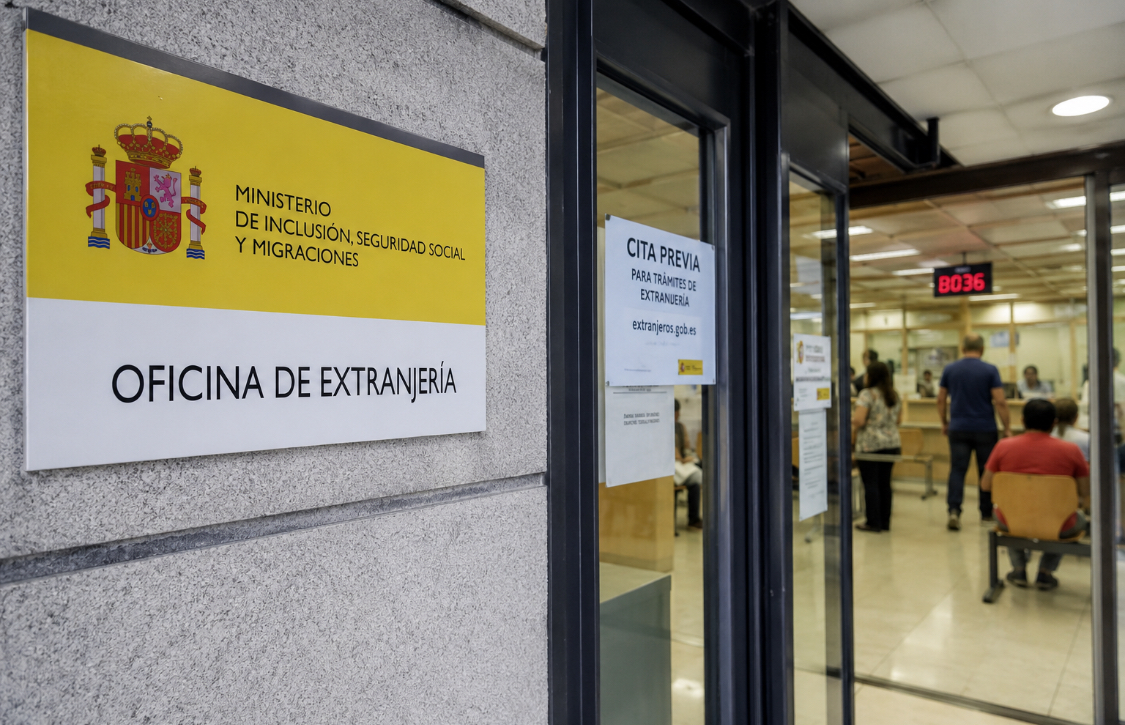
A long-stay student visa allows entry into Spain, but students staying for more than six months normally need the Tarjeta de Identidad de Extranjero, commonly called the TIE. The TIE is the physical foreigner identity card that confirms your legal residence status in Spain. It carries your NIE, photograph, validity period, and residence category.
I have seen many students treat the TIE as something they can “sort out later.” That is risky. The appointment system can be slow in busy provinces such as Madrid, Barcelona, Valencia, Seville, and Málaga. A missing empadronamiento, an unpaid Tasa 790-012 fee, or a wrong appointment category can push the process back by weeks. For a student who also needs a bank account, accommodation contract, university registration, or part-time work documentation, those delays are not small.
As of 2026, Spain’s student visa financial means requirement is still tied to the IPREM, Spain’s public income indicator used in several administrative calculations. The official Spanish consular pages continue to frame student financial proof around the ability to cover living expenses, study costs, return travel where relevant, and any accompanying family members. The Spanish Ministry of Foreign Affairs remains the starting point, but each consulate may publish its own document list and local instructions.
Most visa refusals and post-arrival problems do not begin with missing passports or admission letters. They usually begin with weak financial preparation, unrealistic budgeting, delayed residence procedures, or misunderstanding how Spain’s immigration system actually operates after entry.
Important note: Spanish visa and immigration procedures can vary by consulate, province, and applicant nationality. Treat the figures and procedures here as a 2026 research-based reference, then verify the latest instructions with the Spanish consulate responsible for your place of residence and the relevant Extranjería or police office in Spain.
Understanding Spain’s Student Visa Financial Means Requirement
The financial means requirement exists for one reason: Spain wants proof that you can live and study in the country without becoming a public burden or relying on unauthorised work. For student visa applicants, that proof is usually assessed before the visa is granted. For longer stays, it can also matter later when renewing a study stay authorisation.
The core benchmark is 100% of IPREM per month for the student. In 2026, the commonly applied IPREM reference is €600 per month, or about €7,200 for twelve months. SEPE’s public annual amounts page lists IPREM as €600 monthly and €7,200 annually, while Spanish consulate pages use the same logic when explaining student visa financial proof.
That minimum is only the legal floor. It is not always the safest number to show. A student applying with exactly €7,200 for a full academic year may satisfy the formula on paper, but a consular officer can still question whether the amount is realistic after rent, deposits, food, transport, insurance, course materials, and emergency costs.
For that reason, a stronger application often shows more than the minimum. For one academic year, many applicants are safer showing something closer to €8,000–€10,000, especially if accommodation has not been fully paid in advance. A student going to Madrid or Barcelona with no housing deposit paid should not present the same financial posture as a student going to a smaller city with prepaid accommodation and a university residence confirmation.
| Study stay | Minimum based on €600 monthly IPREM | Stronger evidence range |
|---|---|---|
| 3 months | €1,800 | €2,200–€3,000 |
| 6 months | €3,600 | €4,500–€6,000 |
| 9 months | €5,400 | €6,500–€8,000 |
| 12 months | €7,200 | €8,000–€10,000+ |
The stronger range is not an official replacement for IPREM. It is a practical buffer. Consulates do not only look at arithmetic. They look at credibility. A bank account that held a stable balance for six months reads differently from an account that received a large unexplained deposit two weeks before the appointment.
Accommodation changes the calculation more than many students realise. If your housing is already fully paid for the entire study period, consulates may deduct part of the living-cost expectation from the amount you need to show. The key word is fully. A temporary Airbnb booking for two weeks is not treated the same way as a confirmed university residence contract covering the academic year.
Students sometimes misunderstand this point and submit partial bookings hoping it will significantly reduce the required funds. That usually does not work. Spanish authorities want evidence that the largest recurring expense — accommodation — is genuinely secured. If the residence payment is refundable, unclear, or missing dates, the deduction argument becomes weak very quickly.
For accompanying family members, the financial threshold increases. The usual calculation applied by Spanish authorities adds approximately 75% of IPREM for the first accompanying family member and 50% for each additional member. A married student bringing a spouse and child therefore faces a very different financial profile from a single applicant arriving alone.
| Applicant situation | Estimated minimum financial expectation |
|---|---|
| Single student (12 months) | Around €7,200 |
| Student + first family member | Around €12,600 |
| Student + spouse + one child | Around €16,200 |
One of the recurring mistakes I have seen involves applicants relying entirely on future part-time work in Spain as financial proof. Spanish student residence rules permit limited work rights under certain conditions, but consulates generally expect applicants to prove they can support themselves before arrival. Saying “I will work after I get there” does not replace the requirement to show stable funds during the visa process.
The type of financial evidence matters almost as much as the amount itself. A strong file usually combines consistency, traceability, and clear ownership of funds. Consular officers are trained to spot accounts that appear staged for visa purposes.
Bank Statements
Bank statements remain the most common form of evidence. Most consulates expect between three and six recent months of statements, although local requirements differ. The statements should show:
- consistent account activity,
- stable balances over time,
- the applicant’s or sponsor’s name clearly displayed,
- official bank identification details,
- currency visibility,
- and enough available funds to cover the study period.
Large unexplained deposits close to the appointment date often create suspicion. A student who suddenly receives €9,000 three days before biometric submission without salary history, investment documentation, property sale evidence, or sponsor explanation immediately creates questions. Consulates may not formally accuse an applicant of borrowing funds temporarily, but irregular account behaviour damages credibility.
That problem appears frequently among applicants who receive last-minute “account support” from relatives or agents. Some students even move the same funds between multiple family accounts to create inflated balances for different applications. Immigration officers have seen these patterns for years.
A stronger approach:
- Maintain funds in the account consistently for several months.
- Keep transaction patterns natural.
- Document the source of any major deposit.
- Avoid unexplained cash injections immediately before the appointment.
- Translate financial documents where required.
- Use official stamped statements if the consulate requests them.
Scholarship Letters
Students funded through scholarships usually face a smoother financial assessment if the award documentation is detailed and verifiable. A scholarship letter should clearly state:
- the sponsoring organisation,
- the student’s name,
- the funding amount,
- coverage duration,
- whether tuition, accommodation, or living costs are included,
- and the official signature or verification details.
Partial scholarships create a different calculation. A tuition waiver does not automatically prove living expenses. A student receiving a 50% tuition scholarship may still need to demonstrate substantial personal funds separately.
Sponsor and Parental Support Documents
Many international students rely on parents or relatives. Spanish consulates generally accept sponsorship structures, but they expect the relationship and funding ability to be documented properly.
A sponsor file often includes:
- a signed sponsorship or support letter,
- bank statements from the sponsor,
- proof of income or employment,
- tax returns where applicable,
- identity documents,
- and documents proving the family relationship.
Weak sponsorship letters cause problems constantly. A one-paragraph note saying “I will support my son in Spain” without salary evidence, account history, or relationship documentation is not persuasive.
Students from countries where document verification receives closer scrutiny should pay extra attention to translations, notarisation, and apostille requirements. Spain does not apply the same document culture everywhere. Requirements for applicants in India, China, Nigeria, Pakistan, Vietnam, or several African and Asian jurisdictions can feel stricter than what applicants from some Western countries experience.
That also overlaps with another issue international students sometimes encounter in Europe: country-specific academic verification systems. Germany’s APS process for certain nationalities is one example of how European education systems increasingly demand stronger verification structures for international documents. I explained some of those country-specific verification realities in this article on APS certificate considerations for certain nationalities.
Currency and Exchange Rate Mistakes
Currency mismatches create avoidable confusion. A student may genuinely hold enough money in naira, rupees, yuan, or another currency, but poorly presented exchange calculations can weaken the presentation.
Some applicants submit screenshots from random conversion websites without indicating the euro equivalent clearly. Others forget that exchange rate volatility can reduce the apparent balance below the expected threshold by the time the file is reviewed.
A cleaner approach is to:
- show balances clearly in local currency,
- include recent official exchange references where useful,
- maintain a comfortable buffer above the minimum,
- and avoid calculating funds too tightly around the exact IPREM threshold.
Students often focus heavily on tuition and underestimate living costs. Spain is still more affordable than several other Western European destinations, but inflation and housing pressure have changed the numbers, especially in large cities. Madrid and Barcelona rental markets in 2026 do not behave like they did several years ago.
Health insurance also remains part of the broader financial picture because Spain generally expects non-EU students to hold qualifying coverage for the duration of stay. Students comparing European insurance systems sometimes assume Spain operates identically to Germany’s public-private structure. It does not. The German system is much more segmented between statutory and private providers, which I discussed in this breakdown of health insurance options for students in Europe.
Preparing Financial Documents for the Spain Student Visa Application
The timing of financial preparation changes the quality of the application more than people think. Students who begin organising financial evidence two or three weeks before the visa appointment usually end up reacting under pressure. Missing statements, translation delays, bank certification problems, sponsor inconsistencies, and document expiry dates start colliding all at once.
The strongest applications are usually built gradually.
For most long-stay student visas, applicants begin assembling financial evidence at least several months before the intended travel date. That timeline matters because consulates often want to see financial continuity, not a sudden balance assembled for immigration purposes.
A realistic timeline for many students looks something like this:
- Receive admission confirmation.
- Stabilise funding sources and account balances.
- Secure accommodation or begin residence discussions.
- Purchase qualifying health insurance.
- Prepare translations and legalisations where required.
- Book visa appointment early if the consulate system is crowded.
Students regularly underestimate how quickly Spanish consulate appointment slots disappear during summer intake periods. By June and July, some jurisdictions already have heavy backlogs for September programmes.
One thing worth understanding early is that Spanish consulates do not all operate with the same level of flexibility. The legal framework is national, but document expectations and administrative culture vary by location. Some consulates scrutinise sponsorship structures more aggressively. Others pay closer attention to accommodation proof or insurance wording.
That is why applicants should never rely entirely on social media anecdotes from students applying in another country. A requirement accepted by the Spanish consulate in Lagos may not be treated the same way in Mumbai, Manila, London, New York, or Beijing.
The financial evidence also needs to align with the rest of the application. If a student presents an expensive private university programme in Madrid but shows barely enough money for survival after tuition, the numbers begin to conflict with each other.
That inconsistency appears often in visa refusals. A file can look technically complete but still feel economically unrealistic.
The same issue appears with accommodation claims. If a student states they will rent privately in Barcelona while showing the bare minimum IPREM amount and no deposit preparation, the financial picture immediately looks weak because housing costs in Barcelona are widely known.
One pattern consulates notice quickly: applicants who build documents separately instead of building a coherent financial story. Your tuition, city, accommodation, sponsor income, bank balance, and study duration should logically fit together.
Translations become another overlooked pressure point. Spanish authorities frequently require official translations for financial or civil documents issued in other languages. Students who wait until the last moment sometimes discover that certified translators in their country are fully booked during peak intake periods.
Apostille and legalisation rules can also slow things down. Spain participates in the Hague Apostille Convention, but procedures differ depending on the issuing country and document type. Applicants should confirm early whether:
- bank documents require certification,
- sponsorship affidavits need notarisation,
- translations must be completed by sworn translators,
- or civil records require apostille/legalisation.
Students applying from countries with heavier document fraud concerns often face closer procedural scrutiny. That does not automatically mean refusal risk is higher, but it does mean inconsistencies become harder to overlook.
Another recurring mistake involves trying to compress every requirement into a single document. Some applicants assume one bank statement alone can replace a broader financial explanation. Consulates generally prefer layered evidence:
- bank statements,
- sponsor explanation letters,
- employment evidence,
- scholarship confirmation,
- tax records where relevant,
- and accommodation proof.
Consulates usually respond better to financial evidence that feels coherent and traceable than to oversized document bundles assembled without context.
Students who receive financial support from parents working in informal sectors sometimes struggle with this because income records may not exist in conventional formats. In those situations, stronger supporting evidence becomes even more important — property ownership, business registration, transaction history, tax receipts where available, and stable account movement over time.
Consular officers understand that financial systems differ globally. What creates problems is not always the absence of a formal salary slip. It is inconsistency without explanation.
Why Some Spain Student Visa Applications Get Refused Even When the Financial Requirement Is Met
One of the biggest misunderstandings around Spain’s student visa process is the assumption that reaching the minimum financial threshold automatically creates a strong application.
Spanish consulates do not assess financial evidence mechanically. They assess credibility. Two applicants may both show €8,000 in available funds and receive completely different outcomes depending on how believable the overall file looks.
Students sometimes focus so heavily on reaching the numerical minimum that they forget the application is still being reviewed by a human officer trying to understand whether the proposed study plan makes sense financially and academically.
A common example involves students applying for expensive programmes in Madrid or Barcelona while presenting finances that barely cover the official minimum after tuition payments are removed. The figures may technically satisfy the baseline formula, but the wider picture immediately starts looking strained.
That problem becomes more visible when accommodation has not yet been secured.
A student showing exactly €7,200 for a one-year stay while planning to rent privately in central Barcelona creates obvious financial tension because local housing realities are widely understood. Consulates know what rent pressures look like in major Spanish cities.
The structure of the financial evidence also matters heavily.
Applications regularly face problems because:
- large deposits appear suddenly without explanation,
- sponsor income does not realistically support the promised funding,
- bank activity looks artificial or inactive,
- documents contain inconsistent names or dates,
- or translations and legalisations are incomplete.
Another issue appears when students rely too heavily on informal financial narratives. A sponsorship letter saying “our family will support her education in Spain” means very little without documentation showing how that support will realistically happen.
Consulates also look closely at academic logic.
A student applying for a programme completely disconnected from previous studies or work experience may face deeper scrutiny if the financial structure already looks weak. The concern is not only academic. It becomes an immigration credibility question.
This is one reason organised applications tend to perform better overall. Financial evidence works best when it aligns naturally with:
- the student’s educational history,
- the chosen programme,
- the city of study,
- the accommodation plan,
- and the sponsor’s financial profile.
Students should also understand that refusal decisions are not always written in highly detailed language. A short refusal explanation can still reflect broader concerns about credibility, sustainability, or documentation reliability.
That is why stronger preparation matters. A visa file should not feel like a collection of separate papers assembled quickly before an appointment. The strongest applications read like a coherent story with stable finances, realistic planning, and clear educational intent.
What Happens After Arriving in Spain
Many students think the stressful part ends once the visa is approved. The reality feels different after arrival.
The first weeks in Spain often become an administrative sprint. Students are trying to settle into accommodation, understand local transport systems, complete university registration, arrange banking, activate healthcare coverage, buy local SIM cards, and begin the TIE process almost simultaneously.
For long-stay student visa holders, the visa placed in the passport usually functions as the initial entry authorisation. Once you enter Spain, the focus shifts from visa issuance to residence administration.
One important distinction matters here: students entering Spain on long-stay study visas are not operating under normal short-term Schengen tourist conditions. Their legal basis for stay is tied to study residence authorisation.
That is why the first month after arrival matters so much.
Empadronamiento (Padrón Registration)
The padrón registration is one of the first administrative steps many students complete after finding stable accommodation. The process registers your address with the local municipality.
In practical terms, the empadronamiento becomes important because:
- it confirms local residence,
- it is commonly requested during the TIE process,
- it may be needed for healthcare access or local services,
- and it strengthens address verification for other procedures.
Students staying temporarily in hotels or short-term Airbnb properties often face delays here because some municipalities require formal rental contracts or landlord authorisation documents.
This becomes a serious issue in cities with difficult housing markets where students spend weeks moving between temporary accommodations before securing permanent housing.
The process itself varies by municipality, but applicants commonly provide:
- passport,
- rental contract or housing authorisation,
- proof of address,
- and completed municipal forms.
University Enrollment Confirmation
Students should complete institutional enrollment formalities as early as possible after arrival. Universities may issue additional registration confirmations that later become useful during residence or renewal procedures.
A student visa in Spain is tied directly to active study status. Falling behind academically or abandoning enrollment creates immigration consequences much faster than many students expect.
Opening a Spanish Bank Account
Opening a local bank account is not legally mandatory for every student immediately, but it quickly becomes practical.
Landlords, mobile providers, universities, transport systems, and utility services often operate more smoothly once a Spanish account exists. Some students also transfer living funds gradually from home-country accounts rather than carrying large balances internationally.
Banks may request:
- passport,
- NIE or visa documentation,
- proof of enrollment,
- proof of address,
- and sometimes the empadronamiento.
Requirements vary significantly between banks and provinces. Students should not assume every branch follows identical procedures.
Healthcare Activation
Students entering Spain with private health insurance should confirm immediately that:
- the policy remains active after arrival,
- coverage documents are accessible locally,
- and the insurer’s approved clinics or hospitals are clearly identified.
Insurance confusion causes avoidable stress for international students, especially during residence procedures or emergencies. Some students only realise after arrival that their policy contains reimbursement-only structures that function poorly without strong cash reserves.
This becomes especially important for students comparing European systems before departure. Spain’s insurance expectations are not identical to Ireland’s or Germany’s student structures. Students exploring other European pathways sometimes notice how differently countries approach documentation, insurance, and residence processing. The administrative culture around international students in Spain feels very different from what applicants encounter in places like Ireland, especially around registration systems and local residence procedures. I discussed some of those Irish visa documentation differences in this article on the Ireland student visa process and English requirements.
NIE and Local Identification
Most long-stay students will already have an NIE associated with their visa process. The NIE itself is not the same thing as the TIE card.
The NIE is the foreigner identification number. The TIE is the physical residence card carrying that number.
Students often confuse the two and assume receiving the NIE means the process is finished. It is not.
One detail that confuses many students is that the NIE assignment process is not identical for everyone.
For many international students arriving with a long-stay student visa issued through a Spanish consulate abroad, the NIE is often already printed or embedded directly on the visa sticker placed inside the passport. In those situations, students usually move directly into the TIE process after arrival rather than applying separately for a new NIE number.
Other students encounter different administrative pathways. Some may arrive under procedures where the NIE was not clearly assigned beforehand, while others only discover later that local institutions or police offices expect additional registration steps before the TIE application can fully progress.
That difference creates confusion constantly because students compare experiences across provinces, universities, and nationalities without realising the underlying administrative path may not have been the same.
The safest approach after arrival is to check:
- whether an NIE already appears on the visa,
- whether the university international office expects additional registration,
- and whether the local police office handling the TIE process requires any extra identification documentation.
Students who assume every step is universal often lose time booking unnecessary appointments or arriving at TIE appointments without understanding how their NIE status was recorded during the visa stage.
Student Work Rights in Spain
As of 2026, Spain generally allows international students to work part-time alongside studies under conditions linked to study compatibility. The commonly referenced limit is up to 30 hours per week, although the work arrangement must not interfere with academic obligations.
Students should understand something clearly here: work rights are supplementary. Spain expects applicants to arrive with sufficient financial support already secured.
The students who struggle most financially after arrival are usually those who built their entire survival plan around finding immediate work in major cities where housing costs already consume most entry-level wages.
That pressure becomes even worse when students delay residence procedures and cannot complete normal administrative onboarding with employers quickly.
TIE Application Process in Spain: Step by Step
The TIE process is where many international students finally encounter the Spanish administrative system directly.
For stays longer than six months, obtaining the TIE is generally mandatory. The card functions as the physical proof of legal residence in Spain during the authorised study period.
The deadline matters. Students are generally expected to begin the TIE process within 30 days of arrival in Spain. Waiting too long creates unnecessary complications, especially in provinces where appointment systems become congested during major university intake periods.
Madrid and Barcelona are the obvious examples, but appointment pressure now appears in several student-heavy cities. September and October can become chaotic very quickly.
A common mistake is assuming the TIE process begins only after classes start. In reality, many experienced international offices advise students to start looking for appointments almost immediately after securing housing and completing local registration steps.
Step 1: Book the TIE Appointment (Cita Previa)
The appointment system operates through Spain’s official administrative portal:
https://icp.administracionelectronica.gob.es/icpplus/index.html
Students must select the correct province and the correct procedure category. For most first-time student TIE applications, the relevant categories commonly involve:
- Toma de Huellas (fingerprinting),
- or Expedición de Tarjeta.
The wording can vary slightly depending on the province.
Students regularly make booking mistakes here. Some select the wrong immigration category entirely. Others choose police offices located several hours away without realising it. Appointment slots can also disappear within minutes in busy cities.
This has created an entire informal ecosystem where students repeatedly refresh the portal late at night hoping cancelled slots appear. Universities in Madrid and Barcelona deal with this problem every intake season.
Practical tip:
- Book the appointment as early as possible.
- Check multiple nearby police offices where legally allowed.
- Do not wait until the final week of the 30-day period.
- Keep screenshots or confirmation emails after booking.
Step 2: Prepare the Required Documents
The exact document list can vary slightly by province, but first-time student TIE applications commonly require:
- valid passport,
- passport copy,
- long-stay visa page copy,
- entry stamp proof,
- completed EX-17 form,
- passport-sized photographs,
- empadronamiento certificate,
- proof of enrollment or admission,
- Tasa 790-012 fee payment receipt,
- and appointment confirmation.
The EX-17 form is the standard application form used for the foreigner identity card process. The Tasa 790-012 is the administrative fee payment form linked to the card issuance procedure.
The fee itself is usually modest — often somewhere around €16–€20 depending on updates and processing categories — but students still make errors here constantly.
One of the most common problems involves paying the wrong fee category or arriving without bank validation after printing the form.
Spanish administrative systems still rely heavily on procedural precision. A student may have every major immigration document ready and still lose the appointment because the fee form was completed incorrectly.
Some offices accept card payments nearby. Others expect prior bank processing. Students should verify local instructions carefully instead of assuming procedures are identical nationwide.
Step 3: Attend the Fingerprinting Appointment
The appointment itself is usually straightforward if the file is complete.
Students submit the documents, complete fingerprint registration, and confirm identity details. In many cases, the officer keeps copies and returns the original passport after verification.
If everything proceeds normally, applicants receive a temporary paper receipt confirming that the TIE process has been initiated.
That paper matters.
Students often underestimate its importance and lose it carelessly. The receipt may later help demonstrate ongoing legal processing status while waiting for the physical card.
Appointment experiences vary significantly between offices. Some are efficient and quick. Others involve long queues, unclear instructions, and language barriers.
Students who do not speak Spanish sometimes arrive assuming the process will operate entirely in English. That assumption creates stress quickly in smaller cities or local police offices where English support may be limited.
Step 4: Wait for Card Production
After fingerprint submission, the physical TIE card enters production.
The waiting period commonly ranges from around 20 to 45 days, although delays can stretch longer during high-volume periods.
Some students become anxious during this phase because they expect immediate updates or tracking systems similar to commercial visa services. Spain’s residence-card process often feels slower and less transparent than what many applicants are used to elsewhere.
The temporary receipt generally bridges that waiting period.
Step 5: Collect the TIE Card
Once the card is ready, students normally book or attend a collection appointment depending on local procedures.
The card must usually be collected in person because fingerprint verification forms part of the process.
At collection, students should verify:
- name spelling,
- NIE number accuracy,
- validity dates,
- and residence category information.
Administrative errors are uncommon but not impossible. Correcting mistakes later becomes far more frustrating than identifying them immediately.
How Long Does the TIE Remain Valid?
For students, the TIE validity period generally aligns with the authorised study duration.
A one-year master’s programme may produce a residence card tied roughly to that academic period. Multi-year programmes may involve renewals depending on how the original authorisation was structured.
Renewal processes usually require continued proof of:
- active enrollment,
- satisfactory academic progress,
- financial means,
- and qualifying health insurance.
This is where weak initial financial preparation can create future problems. Students who barely satisfied the first visa stage often struggle more during extensions if their finances deteriorate after arrival.
Why Students Face Delays During the TIE Process
Most TIE delays come from predictable problems:
- late appointment booking,
- missing empadronamiento,
- incorrect fee payments,
- wrong appointment category selection,
- incomplete photocopies,
- address inconsistencies,
- or expired supporting documents.
Housing instability causes more issues than many students expect. A student moving repeatedly between temporary accommodations may struggle to produce consistent address documentation during the first month.
Another recurring issue appears with overstretched international students trying to manage classes, housing, banking, and immigration procedures simultaneously while adapting to a new language environment.
University international offices often become extremely valuable during this stage. Students who ignore institutional support resources usually end up relying on fragmented social media advice instead.
One thing many students only realise later: the TIE is not just an immigration formality. It affects banking, housing, travel confidence inside Europe, work administration, and future renewal procedures. Delaying it creates friction across everyday life in Spain.
Potential Challenges International Students Face in Spain
The administrative side of studying abroad rarely looks difficult from outside the country. The pressure usually appears after arrival, when small procedural mistakes begin stacking together.
Spain is not uniquely difficult compared to other European systems, but it does operate with a strong bureaucratic culture. Students expecting highly digitised, centralised processing often feel surprised by how much still depends on local offices, paper confirmations, appointment systems, and regional variations.
The housing situation has become one of the biggest pressure points for international students in major cities.
Students arriving with weak financial buffers are hit hardest. Rental deposits, agency fees, transport costs, residence paperwork, and upfront accommodation payments can drain accounts much faster than applicants expected while still in their home countries.
That is one reason stronger financial preparation matters beyond visa approval itself.
Students sometimes ask whether showing exactly the legal minimum is enough. Legally, the minimum exists for a reason. Administratively, though, tighter finances create more vulnerability after arrival.
A student with almost no remaining financial margin after paying tuition and rent enters Spain under constant pressure. Any delay involving accommodation, employment, card processing, or emergency costs becomes harder to absorb.
This also affects long-term planning. Some students later hope to transition into work-related residence pathways after graduation, while others compare European post-study systems before choosing a destination. Spain’s structure differs significantly from the dedicated graduate pathways available in countries such as the United Kingdom, where post-study transition routes operate under a different legal framework. I discussed some of those post-study transition mechanics in this article on the UK Graduate Route and student-to-worker transition.
Another challenge students underestimate is administrative timing around travel.
Students waiting for their first TIE card or renewal decisions sometimes assume they can move freely in and out of Spain without considering documentation status carefully. Travel while residence procedures are pending can become complicated depending on timing, nationality, and whether additional return authorisations are required.
This becomes especially stressful during holiday periods when students want to travel home while their residence process remains unfinished.
The safest approach is always to confirm travel implications directly with the relevant immigration office or qualified adviser before leaving Spain during active residence procedures.
2026 Observations Students Should Pay Attention To
Several patterns are becoming clearer in Spain’s international student environment in 2026.
First, housing pressure in major academic cities is changing how students should think about financial preparation. Students who calculated living costs using older internet estimates from years ago are arriving underfunded.
Second, administrative demand has increased. More international students are applying to European programmes broadly, and Spain continues attracting students because tuition and living costs still compare favourably with several English-speaking destinations.
That growth has consequences:
- appointment systems become overloaded faster,
- housing competition intensifies,
- and administrative delays become more visible during peak periods.
Third, financial credibility matters more than students often expect.
Spanish authorities are not only looking for mathematical compliance. They are looking for believable study migration patterns. Stable funding, realistic accommodation plans, organised documentation, and coherent academic objectives all reinforce each other.
Applications that look improvised tend to attract more scrutiny.
When Students Should Seek Professional Help
Not every student needs an immigration lawyer. Many complete the process independently without major difficulty.
There are situations where professional guidance becomes worthwhile:
- complex sponsorship arrangements,
- previous visa refusals,
- family accompaniment cases,
- financial irregularities,
- renewal complications,
- or interrupted study history.
University international offices are often underused resources. Students sometimes assume institutional support will be generic, but experienced international staff have usually seen the same residence problems repeatedly across multiple academic years.
Students who isolate themselves administratively tend to struggle more than students who ask questions early.
Common mistakes that repeatedly create problems for students in Spain:
- showing barely enough funds with no financial buffer,
- using recently borrowed money without documentation,
- delaying TIE appointments,
- failing to secure stable accommodation early,
- submitting weak sponsor evidence,
- assuming work income will solve financial gaps,
- ignoring translation or apostille requirements,
- travelling during unresolved residence procedures without checking implications,
- and relying entirely on social media immigration advice.
How Students Usually Miscalculate the Real Cost of Living in Spain
Many international students arrive in Spain financially prepared for tuition but not fully prepared for settlement costs.
The difference becomes obvious during the first two months after arrival.
Students often calculate expenses using ideal internet estimates that assume immediate access to long-term housing, low transport costs, stable exchange rates, and no administrative friction. Real life rarely behaves that neatly.
Housing creates the biggest shock.
In cities such as Madrid and Barcelona, students frequently face:
- multiple months of deposit requirements,
- agency fees,
- temporary accommodation costs before permanent housing is found,
- and competition from tourists, remote workers, and local renters.
A student who budgeted only for monthly rent may suddenly need several thousand euros upfront before even fully settling into the accommodation.
That pressure becomes worse for students arriving close to September intake periods when housing demand spikes heavily around universities.
Transportation costs are also commonly underestimated. Spain’s public transport system is generally strong, but students moving between temporary housing, police appointments, municipal offices, universities, and bank branches during the first weeks often spend more than expected simply trying to complete administrative tasks.
Food budgeting creates another gap between expectation and reality.
Students arriving from countries with very different pricing structures sometimes underestimate how quickly daily spending accumulates in major Spanish cities, especially if they rely heavily on eating outside university cafeterias or cooking infrequently during the adjustment period.
Administrative costs also add up quietly:
- TIE fees,
- transport cards,
- local SIM registration,
- document printing,
- translation costs,
- residence-related photocopies,
- banking adjustments,
- and emergency purchases after arrival.
Students who arrive with almost no financial buffer usually feel these pressures immediately.
This is why the legal minimum and the realistic survival budget are not always the same thing.
Spain is still comparatively affordable beside several Western European destinations, but the idea that students can comfortably survive in major academic cities using only the exact IPREM threshold has become less realistic over time.
Students planning more conservatively usually adapt better because they are not making every early administrative decision under financial pressure.
The first semester in Spain already involves cultural adjustment, academic adaptation, immigration procedures, and housing pressure. Stable finances reduce the chances of those problems colliding at the same time.
Students often spend weeks collecting documents for the visa stage and then stop verifying procedures once they arrive in Spain. That creates problems because appointment systems, provincial requirements, and immigration interpretations can change faster than older forum discussions or unofficial checklists suggest.
Official References and Resources
Students should always verify requirements directly with the Spanish authorities responsible for their jurisdiction because consular procedures and local administrative practices can change.
- Spanish Ministry of Foreign Affairs
- Official TIE Appointment Portal (Cita Previa)
- Official IPREM Reference via SEPE
- Spanish Ministry of Inclusion, Social Security and Migration
Students should also confirm:
- province-specific TIE procedures,
- current appointment availability,
- updated fee amounts,
- translation requirements,
- and consulate-specific financial expectations.
The students who usually adapt best in Spain are not always the ones with the highest budgets or the strongest academic profiles. They are often the ones who arrive with realistic financial planning, organised documentation, stable housing preparation, and an early understanding of how Spanish administrative systems actually operate.
A student visa approval only opens the door. What happens after arrival determines whether the first academic year in Spain feels stable or constantly reactive.
Planning to study in Spain in 2026? Verify your financial evidence, TIE procedure, insurance structure, and local consulate requirements carefully before submitting your application. Immigration rules change, and local interpretation matters more than many students expect.
Always confirm the latest procedures with the Spanish consulate responsible for your jurisdiction and the relevant immigration authorities in Spain before travelling.
Frequently Asked Questions About Spain Student Visa Financial Means and TIE Application
How much money do international students need to show for a Spain student visa in 2026?
Spain’s student visa financial requirement is commonly tied to 100% of IPREM, which is around €600 per month as referenced in 2026 calculations. For a full academic year, many students therefore need to show at least around €7,200, although stronger applications often present higher amounts, especially in expensive cities or where accommodation has not been fully prepaid.
Can a parent or family member sponsor a Spain student visa application?
Yes. Spain generally accepts sponsorship structures involving parents or close relatives, but the relationship and financial capacity must be documented properly. Consulates commonly expect sponsor bank statements, proof of income, identification documents, and a signed support letter explaining how the student will be funded during the stay.
What is the difference between the NIE and the TIE in Spain?
The NIE is the foreigner identification number assigned to a non-Spanish resident. The TIE is the physical residence card containing that number together with the holder’s immigration status, photograph, and validity period. International students staying longer than six months generally need the TIE card after arriving in Spain.
How long do students have to apply for the TIE after arriving in Spain?
International students are generally expected to begin the TIE process within 30 days of arrival in Spain. Appointment availability can become limited during peak intake periods, especially in cities such as Madrid and Barcelona, which is why many students try to book early.
Can students work in Spain with a student residence permit?
Spain generally allows international students to work part-time alongside studies under conditions linked to study compatibility. The commonly referenced limit is up to 30 hours per week, although employment must not interfere with academic obligations and should comply with current immigration rules.
What usually causes delays during the TIE process in Spain?
Most delays come from practical administrative issues such as late appointment booking, missing empadronamiento documents, incorrect fee payments, incomplete photocopies, or selecting the wrong appointment category on the official booking portal. Housing instability during the first weeks after arrival also creates problems for many students.

Founder of The Global Scholar Guide, focused on international scholarships, student visas, and practical study abroad guidance.