
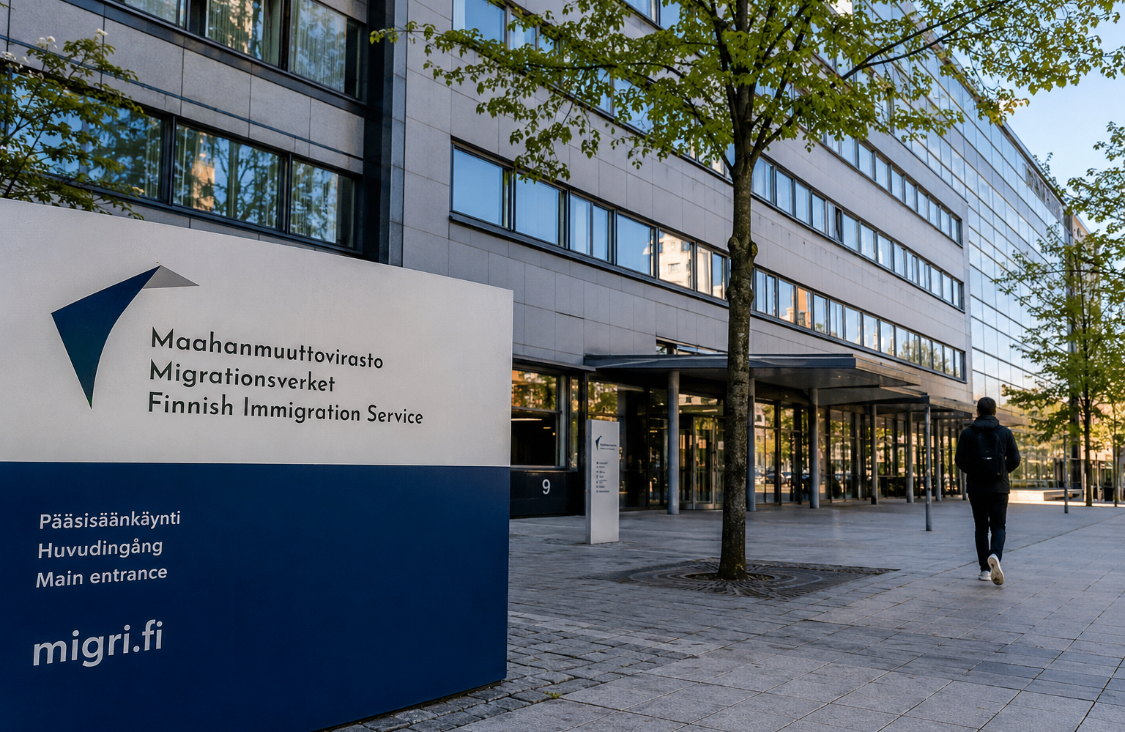
Last Updated: May 2026
2026 Summary: What to Know
- Is admission enough? No. Finnish universities decide if you can study. Migri decides if you can live there. 15% get rejected after admission.
- How much money do I need? €800/month = €9,600 for 1 year. Must be in your account + explainable. Sudden deposits cause rejection.
- How long does processing take? 1-3 months. Apply 3 months before studies start. May-August is slowest.
- Can I work? Yes. 30 hours/week average during semesters. Full-time on holidays. No limit if job relates to degree.
- Why do permits get rejected? Unclear funds, weak insurance, inconsistent dates, or no real study plan. Bank statements get checked line by line.
- Can I stay after graduation? Yes. Apply for 2-year job-seeking permit within 5 years of graduating.
- Do I need IELTS for visa? No. Visa needs admission letter + funds + insurance. IELTS is for university, not Migri.
- Biggest mistake? Thinking admission = visa approval. They’re separate. Migri refuses strong students for weak finances weekly.
Every admission season produces the same misunderstanding. A student receives an acceptance letter from a Finnish university and assumes the difficult part is over. Weeks later, they discover that admission and immigration approval are two separate decisions made for two different reasons.
The university decides whether you qualify academically. Migri decides whether you qualify to live in Finland as a student.
That distinction explains many refusals.
A strong academic record does not automatically solve weak financial evidence. A paid tuition invoice does not compensate for missing insurance. An excellent statement of purpose cannot fix contradictory information in an application file. Finland’s student residence permit process is document-driven. Most decisions are made by examining evidence rather than conducting extensive interviews.
Applicants often call it a Finland student visa because that is the phrase commonly used online. Legally, students pursuing degree programmes that last longer than 90 days are normally applying for a residence permit for studies. The difference is not simply terminology. Residence permits determine your right to live in Finland, work during your studies, renew your status, and later move into post-graduation residence categories.
The permit has become increasingly important as Finland continues to attract international students looking for an education system known for research quality, technological innovation, and relatively clear post-study pathways. Universities have expanded English-taught programmes across engineering, business, information technology, health sciences, education, and environmental fields. As application numbers have grown, scrutiny has increased as well.
One trend immigration advisers have repeatedly observed is that refusals rarely happen because applicants fail to meet a single obvious requirement. Problems usually emerge from patterns. Funds appear suddenly in an account shortly before submission. Documents contain conflicting dates. Insurance coverage does not match permit duration. Academic plans seem disconnected from previous education or professional experience. None of these issues necessarily guarantee refusal, but together they create doubts that can be difficult to overcome.
The financial side of the process has received particular attention in recent years. Finnish authorities want evidence that students can genuinely support themselves after arrival rather than relying on undeclared work or emergency financial assistance. Because of that, bank statements are examined more carefully than many applicants expect.
Timing has also become more important. Students who wait until the last moment often discover that obtaining documents, verifying identity, correcting application errors, and receiving a residence permit card takes longer than anticipated. The result is not always a refusal. Sometimes the student simply misses the beginning of the academic year.
For that reason, the strongest applications tend to share a common characteristic: preparation begins long before the application is submitted. Financial documents are organised early. Insurance is purchased before deadlines become urgent. Passport validity is checked months in advance. Supporting evidence is reviewed carefully before upload.
Important: Immigration requirements change periodically. Information in this article reflects official Finnish Immigration Service guidance available in May 2026. Before submitting an application, verify the latest requirements directly through Migri and Enter Finland.
Proof of Funds Requirement for Finland Student Residence Permit 2026
Most applicants know they need to show money. Fewer understand what Finnish immigration authorities are actually trying to verify.
The purpose of the financial requirement is not to measure wealth. Migri wants evidence that a student can realistically support themselves throughout their studies without falling into financial distress shortly after arrival. The question being examined is simple: can this person genuinely afford to live in Finland while studying?
For 2026, the standard requirement remains €800 per month. For a one-year residence permit, this translates to €9,600. The amount is intended to cover everyday living expenses such as accommodation, food, local transport, study materials, communication costs, and other basic necessities.
Many applicants mistakenly focus only on reaching the required balance. Immigration officers often look beyond the final figure. They assess how the funds were accumulated, where they originated, whether they remain accessible to the applicant, and whether the overall financial picture appears credible.
A student who has steadily maintained savings over several months generally presents a stronger financial profile than someone whose account suddenly receives a large unexplained transfer immediately before submission. The issue is not the size of the deposit itself. The issue is whether the source of the funds can be understood and verified.
In recent admission cycles, applicants have reported additional requests for clarification when account activity appeared unusual. Large cash deposits, multiple transfers from unknown sources, or sudden balances that do not match previous account history can trigger questions that delay processing.
Warning: Borrowing money temporarily to create the appearance of sufficient funds can become a serious problem if account history suggests the money is not genuinely available for your studies. Immigration officers regularly examine financial patterns, not just account balances.
Acceptable Ways to Demonstrate Financial Resources
Students usually meet the financial requirement through one or a combination of the following sources:
- Personal savings held in the student’s name.
- Recognised scholarship funding.
- Government-sponsored scholarship programmes.
- Official financial support arrangements accepted by Finnish authorities.
- Sponsor support accompanied by evidence of the relationship and supporting financial documentation.
Personal savings remain the most straightforward option because they are generally easier to verify. When savings are held directly by the applicant, there are fewer questions about access to funds after arrival in Finland.
Scholarship recipients often have an advantage because funding is already documented through official award letters. Still, the scholarship documentation must clearly show the amount awarded and the period covered. Partial scholarships can create confusion when applicants assume the award covers all financial requirements while the actual funding covers only tuition or a limited portion of living expenses.
Sponsorship arrangements require additional care. A parent or close family member may provide support, but officers need to understand the relationship and the sponsor’s ability to provide the stated funds. Financial support claims unsupported by evidence rarely strengthen an application.
Bank Statements: What Officers Actually Notice
Many discussions about Finland student residence permits reduce bank statements to a simple balance requirement. The reality is more nuanced.
When reviewing financial evidence, officers commonly pay attention to consistency. An account showing regular income, savings activity, and stable balances often appears more reliable than an account with little activity followed by a sudden increase immediately before application.
Students sometimes ask whether they should move funds from multiple accounts into one account before applying. There is no universal answer. Consolidating funds can simplify documentation, but transferring large amounts shortly before submission without clear supporting evidence may create unnecessary questions.
Where possible, financial documents should tell a coherent story. The origin of funds should be understandable. Major transfers should be explainable. Supporting documents should match the information provided elsewhere in the application.
Currency fluctuations can also affect applicants from countries with volatile exchange rates. A balance that comfortably exceeds the requirement in one month may fall below the threshold after currency movements. Students should leave a reasonable margin above the minimum requirement rather than calculating to the exact euro.
What Happens If Accommodation Is Already Provided?
Some scholarship programmes, exchange arrangements, or institutional packages include accommodation benefits. In such cases, the amount a student must personally demonstrate may differ depending on the specific arrangement and supporting documentation.
The critical factor is evidence. If accommodation is being provided, the arrangement should be documented clearly through official university, scholarship, or housing documents. Unsupported claims that accommodation will be available are unlikely to influence an immigration assessment.
Students should also remember that accommodation alone does not eliminate other living expenses. Food, transportation, communication costs, study materials, and personal expenses remain part of daily life in Finland.
Financial Preparation Checklist Before Applying
✓ Maintain funds consistently whenever possible.
✓ Keep records explaining major deposits.
✓ Ensure balances remain above required thresholds.
✓ Confirm scholarship amounts in writing.
✓ Document sponsor relationships properly.
✓ Check that names and account details match application records.
✓ Leave a buffer above the minimum requirement to account for currency fluctuations.
Financial evidence remains one of the most decisive elements of a Finland student residence permit application. Strong academic credentials can open the university door, but weak financial documentation can still prevent a student from receiving permission to enter and remain in the country.
The Full Finland Student Residence Permit Timeline: From Admission Letter to Post-Graduation Work Rights
The timeline many students imagine is remarkably simple. Receive admission. Apply. Receive approval. Travel.
The timeline that actually unfolds is usually much longer, involving several stages that begin before the application is submitted and continue years after arrival in Finland.
Understanding the entire journey helps students avoid one of the most common mistakes in international education planning: focusing exclusively on the initial permit while ignoring everything that comes afterwards.
The strongest applications are rarely the fastest ones. They are usually the ones built around a realistic timeline.
Every year, students lose valuable weeks because they underestimate how many moving parts exist between receiving an admission letter and arriving in Finland. The permit process itself is only one stage. Financial preparation, identity verification, insurance, travel arrangements, permit card production, and post-arrival obligations all sit within the same journey.
Looking at the entire timeline from beginning to end provides a clearer picture of how Finland’s student residence permit system actually functions.
Stage 1: Receiving the Admission Offer
The process begins when a Finnish university or university of applied sciences offers admission.
For immigration purposes, the admission offer becomes one of the foundation documents in the residence permit application. Students should carefully review whether tuition fees have been assessed, whether scholarships have been granted, and whether any acceptance deadlines must be met before the place is secured.
One mistake that appears regularly is delaying permit preparation until every university decision arrives. While comparing options makes sense academically, waiting too long can compress the immigration timeline and create unnecessary pressure.
Students who already know their preferred destination often begin gathering financial documents, insurance information, and passport copies immediately after receiving an offer.
Stage 2: Preparing Financial and Insurance Documents
This stage takes longer than many applicants expect.
Bank statements may need updating. Scholarship letters must be obtained. Sponsors may need to prepare supporting evidence. Health insurance policies must satisfy Finnish immigration requirements.
Insurance deserves particular attention because it is not merely a recommendation. Depending on the duration and nature of studies, students must generally demonstrate adequate health insurance coverage before a residence permit can be approved.
Applications often slow down because students rush to purchase insurance shortly before submission and later discover that the coverage does not satisfy the required conditions.
Stage 3: Submitting the Application Through Enter Finland
Most students apply online through Enter Finland.
The online system allows applicants to upload documents, complete forms, pay the application fee, and track the status of the case.
Accuracy matters.
Names should match passport records exactly. Dates should be consistent across all documents. Uploaded files should be clear and legible. Small mistakes rarely cause immediate refusal, but they can generate requests for additional information that extend processing times.
Students sometimes focus entirely on uploading documents while paying little attention to the information entered into application fields. Immigration officers review both.
Stage 4: Identity Verification
Submitting the online application is not usually the final step.
Applicants are generally required to verify their identity at a Finnish embassy, consulate, or authorised service location, depending on where they apply.
This stage is often underestimated during planning.
Appointment availability varies by country and season. During peak admission periods, waiting times for appointments can become longer than expected. Students who delay booking appointments sometimes create avoidable bottlenecks in their own application process.
Planning Tip: Immigration processing does not truly begin from the moment you think about applying. It begins when all required steps have been completed correctly. Delayed identity verification can slow the entire process even when documents are ready.
Stage 5: Migri Processing and Decision
Once the application is fully submitted and identity verification has been completed, Migri begins its assessment.
The exact processing period varies depending on application volumes, seasonal demand, document quality, and whether additional information is requested.
Students often search for a guaranteed number of days. Immigration systems rarely work that way. Some applications move smoothly because every document is clear and complete. Others remain pending because officers need clarification or because supporting evidence raises questions.
One pattern appears consistently: complete applications generally move faster than incomplete applications.
Applicants should also resist the temptation to compare their case with someone else’s. Two students applying on the same day can receive decisions at very different times because their documentation differs significantly.
Stage 6: Residence Permit Card Production
Approval does not immediately place a student on an aircraft to Helsinki.
After approval, the residence permit card must still be produced and delivered. Students should account for this stage when planning travel dates, accommodation contracts, and arrival schedules.
Booking non-refundable travel arrangements before receiving the final immigration outcome creates unnecessary financial risk.
Stage 7: Arrival in Finland
Once in Finland, attention shifts from obtaining the permit to maintaining status successfully.
Students begin their academic programmes, establish accommodation, open bank accounts where necessary, and integrate into the practical realities of life in Finland.
The transition period often reveals why financial preparation matters so much. Initial accommodation payments, transport costs, deposits, food expenses, and study materials can accumulate quickly during the first months.
Students who arrive with only the bare minimum financial resources sometimes discover that unexpected expenses appear sooner than anticipated.
Stage 8: The Study Period
For many students, this stage lasts several years.
The residence permit remains connected to the original purpose of stay: studying.
Academic progress therefore becomes important. Immigration authorities may later examine whether studies are progressing appropriately when extension applications are submitted.
This is one reason students should keep records, maintain enrolment status, and remain aware of permit validity dates long before expiration approaches.
Stage 9: Residence Permit Renewal
The first permit is not always the last permit.
Students whose studies continue beyond the validity period of their current permit generally need an extension.
Renewal applications introduce a new layer of scrutiny because immigration officers can now assess not only future plans but also actual performance during studies.
Academic progress, finances, insurance, and compliance with permit conditions can all become relevant.
Many students devote enormous effort to obtaining the first permit and surprisingly little attention to preparing for renewal. That imbalance causes avoidable problems later.
Stage 10: Graduation and the Next Immigration Decision
Graduation closes one chapter but immediately opens another.
Many international students want to remain in Finland after completing their degree. The immigration system recognises this reality and provides pathways that allow graduates to seek employment or establish businesses after studies.
The decision facing graduates is no longer whether they can study in Finland. The question becomes whether they can successfully transition into a long-term residence category connected to employment or entrepreneurship.
This stage is often more important than the original permit because it influences long-term career opportunities.
Students comparing destinations sometimes focus only on university rankings while paying little attention to post-graduation pathways. That approach misses a major part of the immigration picture.
For example, countries structure post-study opportunities differently. Students interested in comparing how another popular destination approaches graduate employment rights may find it useful to review New Zealand’s post-study work visa framework, which operates under a different set of immigration and labour market rules.
Finland’s own post-graduation pathway deserves separate attention because it has become one of the most attractive features of the country’s international education system.
Work Rules for International Students in Finland During Studies
Employment rights have become one of the most discussed aspects of studying in Finland, partly because many students are trying to balance rising living costs with academic responsibilities. Unfortunately, some of the information circulating online is outdated. Rules that applied a few years ago are often repeated today as if nothing has changed.
For students holding a Finnish residence permit for studies, employment is allowed, but the right to work remains connected to the primary purpose of residence: studying.
That distinction matters because Finnish immigration authorities expect studies to remain the main activity. Work can support a student financially and professionally, but it cannot replace the academic purpose on which the residence permit was granted.
Under the current framework, students can generally work an average of 30 hours per week during the validity period of their residence permit. The important word is average.
Many students misunderstand this rule and assume they must never exceed 30 hours in any single week. The calculation is broader than that. Some weeks may involve fewer working hours, while others may involve more. What matters is whether the average remains within the permitted limit across the relevant period.
This flexibility has made Finland more attractive to international students because it allows greater freedom in organising work schedules around academic commitments.
Key Reality: Your residence permit exists because you are a student. Even when work opportunities become available, academic progress remains one of the factors that can affect future permit extensions.
What Types of Work Can Students Do?
The rules are generally broad. Students often work in restaurants, retail stores, logistics companies, customer service positions, cleaning services, warehouses, tourism businesses, research projects, university departments, technology companies, and startups.
Those studying specialised subjects sometimes secure positions connected to their academic field before graduation. Engineering students may join technical projects. Information technology students may work with software teams. Business students may gain experience in administration, finance, marketing, or sales functions.
Field-related employment can provide advantages beyond income. Finnish employers often place considerable value on local work experience, making part-time employment an important stepping stone toward post-graduation opportunities.
That said, students should not assume that finding employment immediately after arrival is guaranteed. Labour market conditions vary across regions, industries, language requirements, and economic cycles.
English-speaking opportunities exist, particularly in larger cities and international companies, but knowledge of Finnish or Swedish can still create a significant advantage in many sectors.
Internships and Practical Training
Internships occupy a slightly different position because they are often connected directly to a student’s degree programme.
Many Finnish programmes include practical training requirements, industry placements, research projects, or professional internships. These opportunities can become some of the most valuable experiences students gain during their studies.
Employers frequently use internships to identify potential future employees. A successful internship can lead to thesis collaboration, graduate employment, or long-term professional networks that remain useful years after graduation.
Students should maintain records of practical training periods and ensure that university requirements are properly documented. These records may later prove useful during permit extensions or employment applications.
Self-Employment and Freelance Work
The modern labour market has created new questions that immigration systems did not frequently encounter a decade ago.
Students increasingly earn income through freelance work, consulting, digital services, content creation, software development, graphic design, tutoring, and online business activities.
While such activities can be possible, students should understand their obligations regarding taxation, reporting requirements, and immigration compliance. The fact that income originates online does not automatically remove legal responsibilities within Finland.
Anyone intending to engage in substantial self-employment activity should familiarise themselves with Finnish tax and business registration requirements rather than relying on assumptions drawn from another country.
Taxation and Income Reporting
One of the first administrative steps many international students encounter after securing employment is taxation.
Finland operates a structured tax system, and employment income generally requires proper registration and reporting.
Students often arrive focused entirely on immigration matters and only later discover the practical importance of obtaining the correct tax information for employment purposes.
Employers normally provide guidance regarding payroll procedures, but students should still take responsibility for understanding their own obligations.
Ignoring tax requirements creates problems that can extend far beyond university years. Good administrative habits established early often make future residence and employment processes considerably smoother.
Common Employment Mistakes International Students Make
The mistakes that create problems are rarely dramatic.
More often, they develop gradually.
A student becomes heavily involved in work and academic performance begins to decline. Another student focuses so heavily on earning income that permit renewal dates are forgotten. Someone else assumes immigration authorities are interested only in employment records and pays little attention to academic progress.
The strongest long-term outcomes usually come from balance.
Students who manage work, studies, finances, and immigration obligations together tend to place themselves in a stronger position when graduation approaches and future residence options become available.
A mistake worth avoiding: Do not assume that employment automatically compensates for weak academic progress. Residence permits for studies remain connected to studying. Poor academic performance can become relevant when extension applications are assessed.
Residence Permit Renewal: Where Many Students Encounter Unexpected Problems
The first residence permit receives most of the attention because it determines whether a student can move to Finland.
Renewal decisions are different.
By the time an extension application is submitted, immigration authorities are no longer evaluating future intentions alone. They can also evaluate what has actually happened since the student arrived.
This changes the nature of the assessment.
The original application focuses heavily on plans. A renewal application includes evidence of real-world behaviour, academic progress, financial circumstances, and compliance with residence permit conditions.
Students who begin preparing for renewal only a few weeks before permit expiry often discover that documents, financial evidence, insurance records, and academic information require more preparation than expected.
The strongest approach is to think about renewal from the beginning of studies rather than waiting until the permit is close to expiring.
When extension time arrives, students who have maintained organised records generally find the process significantly less stressful than those attempting to reconstruct years of information at the last minute.
Several factors receive particular attention during renewal assessments, and understanding them early can prevent many of the difficulties that appear later in a student’s journey.
Several areas consistently receive attention when a student applies to extend a residence permit in Finland. Some are obvious. Others only become visible when a renewal application is being reviewed.
Academic Progress Matters More Than Many Students Realise
Finnish immigration authorities generally expect students to make genuine progress toward completing their degree.
This does not mean every student must achieve perfect grades. Universities understand that academic journeys are rarely linear. Courses may need to be retaken. Research projects may take longer than expected. Personal circumstances can affect study schedules.
The broader question is whether studies are actively progressing.
If a student has accumulated very few credits over a long period, repeatedly delayed coursework, or appears disconnected from their programme, questions may arise during an extension assessment.
Students sometimes assume academic issues remain entirely between themselves and the university. Immigration systems do not always view the matter that way because the residence permit was granted specifically for educational purposes.
Maintaining enrolment records, transcripts, course registrations, and evidence of ongoing academic activity can become extremely valuable when extension time arrives.
Financial Requirements Continue After Arrival
One of the most common misconceptions is that proof of funds only matters during the first application.
Financial capacity remains relevant throughout the student’s stay.
When applying for an extension, students may again need to demonstrate that they can support themselves while continuing their studies.
Applicants who relied heavily on savings during their first year sometimes discover that they need a realistic financial plan for subsequent years as well.
Part-time employment can contribute to financial stability, but students should avoid assuming future earnings will automatically satisfy every immigration requirement. Financial evidence should remain organised and clearly documented.
Bank records, scholarship confirmations, employment income, and other supporting documents should be retained rather than discarded after the first permit is approved.
Health Insurance Should Never Become an Afterthought
Insurance receives far less discussion online than proof of funds, yet insurance-related problems appear surprisingly often in extension cases.
Students sometimes allow policies to expire. Others switch providers without carefully reviewing coverage conditions. Some assume insurance purchased years earlier automatically remains suitable for future permit applications.
Before submitting an extension application, students should review policy validity periods, coverage levels, and current immigration requirements rather than relying on assumptions.
Small administrative oversights can create delays that would have been easy to avoid with earlier preparation.
When Should Students Apply for an Extension?
Waiting until the last possible moment rarely improves any immigration process.
Students should monitor permit validity carefully and begin preparing extension documentation well before expiration approaches.
Gathering financial records, obtaining academic documentation, confirming insurance coverage, and reviewing application information often takes longer than expected.
Early preparation creates time to correct mistakes before they become urgent problems.
Renewal Checklist
✓ Valid passport
✓ Evidence of continued studies
✓ Academic progress records
✓ Updated proof of funds
✓ Valid health insurance where required
✓ Accurate application information
✓ Application submitted before permit expiry
A Finland Student Residence Permit Is Easier to Renew Than to Repair
One of the most expensive mistakes international students make is treating immigration compliance as something that matters only when an application is being submitted.
Residence permits are easier to maintain than to repair after problems emerge.
Students who keep academic records organised, monitor permit validity dates, maintain insurance coverage, and preserve financial documentation usually encounter fewer complications when extension applications are required.
The opposite pattern appears regularly. A student ignores administrative obligations for months, loses records, allows insurance to lapse, or waits until the final weeks before expiry to begin preparing documents. What could have been a straightforward extension becomes a stressful attempt to reconstruct years of information.
Good immigration habits are rarely visible when everything is working. Their value becomes obvious when renewal time arrives.
Finland Student Residence Permit Rejection Reasons and How to Avoid Them
Students often search for approval rates. A more useful question is why applications fail.
Most refusals do not happen because applicants are unqualified students. They happen because immigration officers are not satisfied that the legal requirements have been met.
Understanding the most common refusal patterns can significantly improve application quality.
1. Insufficient or Unconvincing Proof of Funds
This remains one of the most frequently discussed issues in student residence permit applications.
The problem is not always a lack of money.
Sometimes the issue is credibility.
An account may contain enough funds on the day the application is submitted, yet the surrounding transaction history creates uncertainty about whether those funds genuinely belong to the applicant or will remain available during studies.
Large unexplained deposits, inconsistent account activity, unsupported sponsorship claims, or missing financial documentation can weaken an otherwise strong application.
The safest approach is transparency. If funds originate from a scholarship, document it. If a sponsor is involved, explain the relationship clearly. If major transfers occurred, retain evidence showing where the money came from.
2. Incomplete Documentation
Incomplete files continue to create avoidable delays and refusals.
Missing pages, unreadable scans, expired documents, incorrect uploads, and inconsistent information across forms may appear minor to applicants. Immigration officers reviewing thousands of applications often view them differently.
Every document should support the same narrative.
If passport information says one thing while application forms say another, clarification becomes necessary. If financial documents contradict declared information, concerns emerge.
Careful review before submission remains one of the simplest ways to strengthen an application.
3. Questions About Genuine Study Intent
Not every refusal involves finances.
Immigration authorities also evaluate whether the proposed studies appear credible.
Most legitimate students have no difficulty satisfying this requirement. Problems typically arise when academic choices appear disconnected from previous education, professional experience, or future goals without any reasonable explanation.
A student with a convincing educational plan generally finds it easier to demonstrate genuine intent than someone whose application contains significant unanswered questions.
Officers are not looking for perfect career stories. They are looking for coherent ones.
4. Weak Academic Progress During Extension Applications
This issue appears more frequently during permit renewals than first-time applications.
If studies have progressed very slowly, immigration authorities may seek additional explanations.
Academic difficulties can happen. Universities recognise that. Immigration officers recognise that as well.
The problem arises when there is little evidence that studies are actively moving toward completion.
Students facing exceptional circumstances should maintain records that explain interruptions or delays rather than assuming those circumstances will automatically be understood later.
5. Previous Immigration or Compliance Issues
Past immigration history can sometimes influence future decisions.
Previous visa violations, overstays, fraudulent documentation, or serious compliance concerns may attract additional scrutiny.
Not every historical issue automatically results in refusal. Context matters.
What often matters most is whether the applicant addresses the issue honestly and provides accurate information rather than attempting to conceal it.
One recurring pattern: Many refusals are not caused by a single catastrophic mistake. They result from several smaller concerns appearing together. Weak finances, missing documents, inconsistent information, and unclear study plans can collectively create enough doubt to affect the outcome.
If an Application Is Refused
A refusal does not automatically end the matter.
Applicants generally receive a written decision explaining the grounds on which the application was refused.
Understanding those reasons is critical. Students sometimes rush into a new application without first addressing the issues identified in the original decision.
Depending on the circumstances, appeal rights may be available. Deadlines matter. Waiting too long can remove options that would otherwise have existed.
Before taking further action, applicants should carefully review the refusal notice, supporting explanations, and any available appeal instructions.
Many unsuccessful applications become stronger later because the underlying weaknesses were properly identified and corrected rather than ignored.
What Immigration Officers Often Notice Before a Finland Student Residence Permit Is Approved
Students sometimes imagine that residence permit decisions are made by checking a list of requirements and ticking boxes one after another. The reality is usually more holistic.
Immigration officers review individual documents, but they also look at whether the overall application makes sense when viewed as a whole.
For example, a student may satisfy the minimum financial requirement while still creating concerns if account activity appears unusual. Another applicant may have strong finances but submit documents containing inconsistent dates, conflicting educational histories, or unexplained gaps.
The strongest applications tend to be internally consistent. Academic history supports the proposed programme. Financial records support declared resources. Supporting documents match information entered in the application.
When officers can easily understand the applicant’s story, decisions generally become easier. When an application raises repeated questions, requests for clarification or additional scrutiny become more likely.
This does not mean applicants must present a perfect profile. Immigration systems deal with imperfect situations every day. What matters is whether the information provided is credible, explainable, and supported by evidence.
Before You Apply: Understanding Finland’s Documentation Requirements
By the time most students begin the actual residence permit application, they have already completed the difficult academic phase. Admission has been secured. Tuition planning has been completed. Accommodation research has started.
What remains is the immigration process itself.
The quality of the application often depends less on complicated legal knowledge and more on preparation, accuracy, and attention to detail.
Step-by-Step Finland Student Residence Permit Application Process
Step 1: Secure Admission From a Recognised Institution
The residence permit application starts with an admission offer from a recognised Finnish educational institution.
The admission letter becomes one of the core documents in the application because it establishes the legal purpose of residence. Without admission, there is no student residence permit application.
Students should review the admission letter carefully to ensure names, programme details, study duration, and institutional information are correct.
Step 2: Arrange Proof of Funds
Before opening the application portal, students should already have their financial documentation organised.
Waiting until the final stage often creates avoidable problems.
Bank statements, scholarship letters, sponsor documentation, and supporting financial evidence should be prepared before submission begins.
Many successful applicants create a dedicated document folder containing every financial record they may need throughout the process.
Step 3: Obtain Suitable Health Insurance
Health insurance remains a mandatory part of the process for many international students.
The exact coverage requirements can depend on the nature and duration of studies. Students should verify current insurance requirements directly through Migri before purchasing a policy.
One common mistake is purchasing the cheapest available policy without checking whether it satisfies immigration requirements.
Insurance that fails to meet the required standard can delay an application just as easily as missing financial documents.
Step 4: Submit the Application Through Enter Finland
Applications are generally submitted through the Finnish online immigration platform.
Students create an account, complete the required forms, upload supporting documents, and pay the application fee.
The online process appears straightforward, but accuracy remains critical.
Names should match passport records exactly. Uploaded files should be clear and readable. Dates should remain consistent across all documents.
Many requests for additional information originate from simple inconsistencies that could have been corrected before submission.
Step 5: Verify Identity
After the online application is submitted, applicants are generally required to verify their identity through a Finnish diplomatic mission or another authorised location.
Students should schedule appointments as early as possible, particularly during major admission seasons when appointment demand increases significantly.
Delays at this stage often affect the overall timeline more than students initially expect.
Step 6: Wait for Processing and Decision
Once the application is complete, processing begins.
During this stage, immigration officers assess the entire application package rather than focusing on a single document.
Financial evidence, admission records, insurance, identity information, and supporting documentation are reviewed collectively.
If clarification is required, additional information requests may be issued.
Responding promptly to such requests can help prevent unnecessary delays.
Finland Student Residence Permit Document Checklist
| Document | Purpose |
|---|---|
| Valid Passport | Identity verification |
| Admission Letter | Proof of study place |
| Proof of Funds | Financial capacity assessment |
| Health Insurance | Medical coverage requirement |
| Passport Photograph | Application identification |
| Scholarship Documents (if applicable) | Funding verification |
| Sponsor Evidence (if applicable) | Financial support verification |
Application Mistakes That Cause Delays
The majority of processing problems are surprisingly predictable.
Students upload unclear scans. Documents expire before decisions are issued. Names differ across records. Insurance coverage does not match permit requirements. Financial evidence lacks supporting explanations.
None of these problems appear dramatic when viewed individually.
Together, they can slow processing considerably.
One useful habit is to review the application from the perspective of someone seeing it for the first time. Every document should support the same story. Every date should make sense. Every financial claim should have evidence.
The strongest applications tend to feel boring because there is nothing confusing about them.
Job-Seeking Residence Permit After Graduation
The conversation about studying in Finland should not end at graduation.
For many international students, graduation is the point where the most important immigration decisions begin.
Finland allows eligible graduates to apply for a residence permit to seek employment or establish a business after completing their studies.
This opportunity has become one of the country’s most attractive features for international students who hope to build long-term careers after university.
The permit can provide up to two years to search for employment, explore professional opportunities, or develop entrepreneurial activities within Finland.
That time matters.
Job searches rarely follow perfect schedules. Some graduates secure employment before graduation. Others need several months to navigate the labour market, attend interviews, develop language skills, or identify suitable positions.
The post-graduation residence pathway provides room for that transition.
Who Can Apply?
Eligibility generally depends on successful completion of studies in Finland.
The completed qualification becomes the basis for the application.
Graduates should maintain copies of degree documentation, completion records, and other academic evidence because these documents often become important during the transition process.
Moving From Graduate Status to Employment-Based Residence
The long-term objective for many graduates is not the job-seeking permit itself.
The objective is employment.
Once suitable work is secured, graduates can explore residence permit categories connected to employment.
The transition often becomes easier for individuals who have already built local experience through internships, part-time employment, research projects, thesis collaborations, or professional networks developed during studies.
This is one reason many employers place significant value on practical experience gained while studying.
The relationship between student employment and post-graduation opportunities is often stronger than many students realise when they first arrive in Finland.
Students interested in comparing how other countries approach graduate employment rights may find useful context in our analysis of the New Zealand post-study work visa system, which follows a different immigration model and labour market structure.
For Finland, the broader message remains straightforward: obtaining a student residence permit is only the first immigration decision. Renewal, graduation, job-seeking status, and eventual employment-based residence permits are all connected stages within the same long-term journey.
Comparative Perspective: Why Timing Matters More Than Many Students Expect
Every immigration system has its own pressure points.
Japan, for example, places significant emphasis on the Certificate of Eligibility process before students travel. Finland follows a different structure, but the underlying lesson is remarkably similar: students who prepare late often create avoidable problems for themselves.
Applicants comparing study destinations may find it useful to review our detailed analysis of Japan student visa requirements and COE procedures to understand how preparation timelines influence outcomes across different immigration systems.
Whether the destination is Finland, Japan, or elsewhere, strong applications are usually built months before submission rather than days before deadlines.
A Final Observation on Finland’s Student Residence Permit System
After studying student immigration decisions, refusal patterns, and policy developments across multiple destinations, one pattern appears repeatedly: successful applicants rarely succeed because they discover a secret strategy. They succeed because they remove uncertainty from their applications.
Finland’s residence permit system is built around evidence.
The admission letter proves that a university wants to teach you. Financial documents demonstrate that you can support yourself. Insurance confirms that medical risks have been addressed. Academic records show that studies are progressing. Together, these documents create a picture that immigration officers evaluate.
Most refusals do not emerge from a single dramatic mistake. They develop when several smaller concerns appear at the same time.
An unclear bank statement may not be fatal by itself. Neither is a missing supporting document. Nor is a minor inconsistency in dates. When those issues appear together, confidence in the application begins to weaken.
The strongest applications usually feel straightforward because every document supports the same story.
Students who approach the process with that mindset often place themselves in a stronger position not only for initial approval, but also for permit renewals, graduation, post-study opportunities, and long-term residence planning.
That long-term perspective matters.
The residence permit application is not simply an administrative hurdle before university begins. For many students, it becomes the first step in a much larger journey that may eventually include employment, entrepreneurship, research, or long-term settlement in Finland.
Finland Student Residence Permit Success Checklist
Before submitting your application, make sure you can answer “yes” to every item below:
- □ I have received admission from a recognised Finnish institution.
- □ My passport remains valid for the required period.
- □ My proof of funds clearly satisfies current requirements.
- □ I can explain the source of major deposits if necessary.
- □ My health insurance meets current Finnish requirements.
- □ My uploaded documents are clear and complete.
- □ Names and dates are consistent across all records.
- □ I have reviewed every section of the application before submission.
- □ I have planned sufficient time for identity verification and processing.
- □ I understand the requirements for future permit renewal.
Useful Comparative Reading
Students researching multiple destinations often discover that immigration procedures differ significantly from one country to another. France, for example, requires certain students to complete post-arrival validation procedures after entering the country. Readers interested in understanding how another major European destination handles student immigration compliance may find our analysis of the France VLS-TS and OFII validation process useful for comparison.
Frequently Asked Questions About Finland Student Residence Permit 2026
How much money do I need to show for a Finland student residence permit in 2026?
Most students must show access to at least €800 per month for living expenses. For a one-year permit, that generally means €9,600. If tuition fees have not been paid, applicants may also need to demonstrate sufficient funds to cover those costs separately.
Can I work while studying in Finland?
Yes. International students holding a residence permit for studies can generally work up to an average of 30 hours per week during the validity of their permit, provided studying remains the primary purpose of residence.
What is the most common reason Finland student residence permit applications are refused?
Financial evidence remains one of the most common problem areas. Applications may face difficulties when proof of funds is insufficient, inconsistent, difficult to verify, or supported by incomplete documentation.
Can I stay in Finland after graduation?
Yes. Eligible graduates can apply for a residence permit that allows them to seek employment or establish a business in Finland after completing their studies. This permit can be granted for up to two years.
Do I need health insurance for a Finland student residence permit?
Yes. Health insurance is an important part of the application process for many international students. The required coverage depends on the nature and duration of studies, so applicants should always verify current requirements through Migri before purchasing a policy.
When should I apply for a Finland student residence permit?
Students should apply as soon as they have secured admission and gathered the required supporting documents. Early applications reduce the risk of delays caused by identity verification appointments, document corrections, or seasonal processing backlogs.
Official Resources
- Migri – Studying in Finland
- Migri – Student Income Requirement
- Migri – Seeking Work After Graduation
- Migri – Student Guide
- Enter Finland Application Portal
Preparing for a Finland Student Residence Permit Application?
Start early. Organise your financial documents before admission deadlines become urgent. Review insurance requirements carefully. Keep academic and immigration records organised from your first semester. Students who prepare months in advance generally face fewer delays, fewer document requests, and fewer surprises during the application process.
A residence permit decision is rarely determined by luck. Preparation still remains the most reliable advantage an applicant can control.

Founder of The Global Scholar Guide, focused on international scholarships, student visas, and practical study abroad guidance.