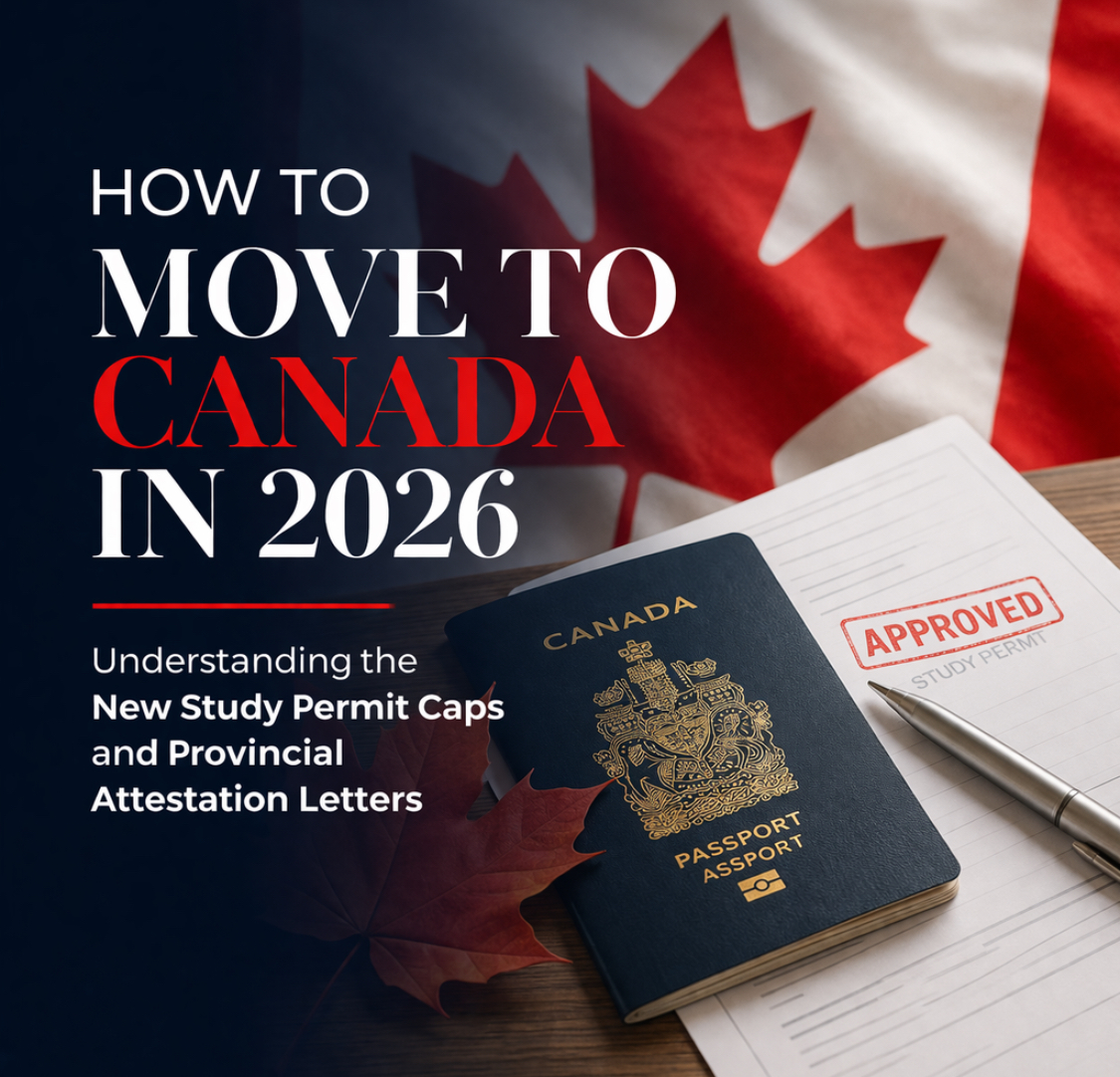
Moving to Canada in 2026 as an international student is no longer as straightforward as simply receiving an admission letter. The landscape has shifted toward a more regulated, capped system where the Provincial Attestation Letter (PAL) acts as the ultimate gatekeeper for most applicants. If you are eyeing a 2026 intake, navigating these new administrative layers is the difference between a successful visa stamp and a technical refusal.
Full Transparency: The 2026 cap significantly limits processing for many undergraduate and college programs, which naturally increases competition for available spots. While this guide provides a strategic roadmap based on the latest IRCC 2026 guidelines, approval is never guaranteed. Provincial allocations can be exhausted quickly, and individual merits—such as ties to your home country—remain critical.
Recommended: UK Graduate Route Visa 2026 Update: How to Transition from Student to Worker
Canada continues to refine its 2026–2028 Immigration Levels Plan, balancing the intake of global talent with the country’s infrastructure and housing capacity. For the 2026 cycle, the focus is on “sustainable growth.” This means while the doors are open, they are being monitored through a sophisticated quota system. Whether you are aiming for a specialized diploma or a research-based PhD, understanding where you fit within the national target of 408,000 permits is your first step.
In this deep dive, we break down the exact numbers for 2026, the specific provinces that hold the most “slots,” and the critical exemptions that allow Master’s and Doctoral students to bypass the most rigorous parts of the cap entirely.
The 2026 Study Permit Landscape: By the Numbers
The 2026 cap is not just a general guideline; it is a hard ceiling designed to reduce Canada’s temporary resident population to below 5% by the end of 2027. For this calendar year, Immigration, Refugees and Citizenship Canada (IRCC) has set a total target of 408,000 study permits.
While that number might seem large, it is split between two distinct groups:
- New Arrivals: Approximately 155,000 permits are reserved for students arriving in Canada for the first time.
- Extensions: Approximately 253,000 permits are earmarked for students already in the country who need to renew their status.
2026 Provincial and Territorial Allocations
Because approval rates vary, the official 2026 provincial allocations provide more “application spaces” than actual permits. This accounts for potential refusals. If you are applying for a program that requires a PAL, your “competition” is effectively limited by these provincial buckets:
| Province / Territory | Permit Issuance Target | Application Spaces (Cap) |
|---|---|---|
| Ontario | 70,074 | 104,780 |
| Quebec | 39,474 | 93,069 |
| British Columbia | 24,786 | 32,596 |
| Alberta | 21,582 | 32,271 |
| Manitoba | 6,534 | 11,196 |
| Saskatchewan | 5,436 | 11,349 |
Note: The total nationwide application allocation for PAL-required students is 309,670 spaces. If you are applying to smaller provinces like New Brunswick (8,004 spaces) or Nova Scotia (8,480 spaces), the windows for application can close much faster than in Ontario.
You may like: The “APS Certificate” Explained: Why Indian, Chinese, and Vietnamese Students Need This for Germany.
Strategy Tip:
These allocations are distributed by the provinces to individual Designated Learning Institutions (DLIs). A DLI in Ontario might have 5,000 “slots,” while another might only have 200. Always ask your school’s international office about their current PAL remaining quota before paying your tuition deposit.
The Provincial Attestation Letter (PAL): Your 2026 Gatekeeper
A Provincial Attestation Letter (PAL) or Territorial Attestation Letter (TAL) is an official document issued by a Canadian province or territory. It serves as proof that your study permit application fits within the local allocation of the national cap. Without it—unless you are exempt—the IRCC will return your application as “incomplete” before even looking at your documents.
Who is Exempt? The “Graduate Fast-Track”
One of the most vital updates for the 2026 cycle is the “unfreezing” of graduate student requirements. As of January 1, 2026, master’s and doctoral degree students enrolled at public Designated Learning Institutions (DLIs) are fully exempt from the PAL requirement.
| Student Category | PAL Required? | Reason / Detail |
|---|---|---|
| Master’s & PhD (Public DLIs) | NO | Priority for high-level research talent; 14-day processing for PhDs. |
| Undergraduate & College | YES | Subject to provincial caps and quota limits. |
| Primary & Secondary (K-12) | NO | Minor children are traditionally exempt from intake caps. |
| Study Permit Extensions | NO | Applies if staying at the same DLI and same level of study. |
| Joint Programs | YES (ONE) | Only one PAL needed even if the program spans multiple schools. |
How to Obtain Your PAL: A 4-Step Workflow
If you fall into the category that requires a PAL (typically undergraduate and non-degree programs), the process is institutional. You do not apply to the province directly.
- Accept your Offer: Once you receive a Letter of Acceptance (LOA) from a DLI, you must formally accept it.
- Pay the Deposit: Most schools require a tuition deposit (ranging from $2,000 to $3,000 CAD) before they will initiate a PAL request.
- School-Led Request: The DLI applies to the provincial government on your behalf using their allocated quota.
- Digital Issuance: Once approved, the school sends you a digital copy of the PAL. This document is usually valid until the end of the calendar year (December 31, 2026).
Critical Note for PhD Applicants: Beyond the PAL exemption, the IRCC has committed to an expedited 14-day processing standard for doctoral students and their accompanying family members, provided they apply online from outside Canada.
Step-by-Step: Moving to Canada in 2026
Applying for a study permit in 2026 requires a chronological approach. Missing a single step—specifically the validation of your Letter of Acceptance (LOA)—can result in an immediate refund and rejection of your file.
- 01. Secure Admission: Apply to a DLI. Ensure your program aligns with your career progression to avoid “purpose of study” refusals.
- 02. The LOA Validation: Once you receive your LOA, your school must validate it with IRCC. Confirm with your DLI that this step is complete before you hit ‘Submit’ on your permit application.
- 03. Obtain your PAL/TAL: Unless you are a Master’s/PhD student at a public DLI, wait for your school to send your Provincial Attestation Letter.
- 04. Financial Preparation: Gather your proof of financial support. IRCC now audits these more strictly than in previous years.
- 05. Submit Online: Create your IRCC secure account. Upload your forms (IMM 1294), PAL, LOA, and supporting evidence.
- 06. Biometrics & Medicals: After paying your fees ($150 for the permit + $85 for biometrics), book your appointment at a Visa Application Centre (VAC).
The 2026 “Must-Have” Document Checklist
Use the table below to ensure your digital folder is complete. Note the updated 2026 living expense requirement, which has increased significantly from previous years.
| Required Document | 2026 Specification |
|---|---|
| Valid Passport | Must be valid for the duration of your intended stay. |
| Letter of Acceptance (LOA) | Must include DLI number and be validated by the school. |
| Proof of Funds (Outside Quebec) | $22,895 CAD (for single applicant) + 1st year tuition. |
| Proof of Funds (Quebec) | $24,617 CAD (for single applicant 18+) + 1st year tuition. |
| PAL or TAL | Required for all undergraduates unless otherwise exempt. |
| Statement of Purpose (SOP) | Crucial for showing “dual intent” and home-country ties. |
Timeline Warning: Due to the added layer of PAL issuance and the verification of LOAs, we recommend starting your application at least 7 to 9 months before your start date.
2026 Strategy: Avoiding the “Technical Refusal”
With the 2026 caps in full effect, the IRCC has become less tolerant of administrative errors. A “technical refusal” happens when your application is rejected not because of your profile, but because a document—like the PAL—is missing or expired.
Common Pitfalls to Avoid
- Expired PALs: Remember that a PAL issued in 2026 typically expires on December 31, 2026. If you delay your visa submission into the next year, you will likely need a new attestation from your school.
- The “Private College” Trap: Be aware that many private career colleges no longer offer eligibility for the Post-Graduation Work Permit (PGWP). If your goal is to stay in Canada after graduation, verify the DLI’s status on the official DLI list before paying your deposit.
- Inadequate Proof of Funds: Submitting only the minimum $22,895 CAD (plus tuition) is often seen as “borderline” by visa officers in high-cost cities like Toronto or Vancouver. Aim to show a buffer of at least $5,000 above the requirement to demonstrate true financial stability.
Final Conclusion
Moving to Canada in 2026 is a game of precision. While the undergraduate cap creates a more competitive environment, the exemption for Master’s and PhD students at public institutions offers a significant “fast-track” for advanced researchers. By securing your PAL early, meeting the updated 2026 financial thresholds, and submitting a well-verified LOA, you can navigate this capped system with confidence.
Take it further: Germany Student Visa Guide 2026: The Blocked Account, Health Insurance, and Appointment Strategy
Sources & Official References
This guide is based on IRCC operational instructions and ministerial orders effective as of early 2026. For real-time updates, consult the following:
- IRCC: Provincial Attestation Letter Requirements
- 2026 Provincial/Territorial Allocations Notice
- IRCC: Instructions for Graduate Students (Exemptions)
Disclaimer: The Global Scholar Guide provides educational information for mobility strategy. We are not regulated immigration consultants. Always verify your specific case with an RCIC or the official IRCC portal.

Lead Content Strategist at The Global Scholar Guide, specializing in scholarship research, relocation guidance, and international education content.